Asset Classes
The only asset class with a growing season
Soft commodities are the one part of the platform where the physical world sets the rhythm. Liquidity follows the crop, not the trading calendar, and pretending otherwise produces prices that do not hold.
Liquidity follows the crop cycle, not the trading calendar
No meaningful market outside the listing venue's hours
Moves on forecasts, which arrive without a schedule
Some contracts are illiquid, and saying so is the honest answer
See it live
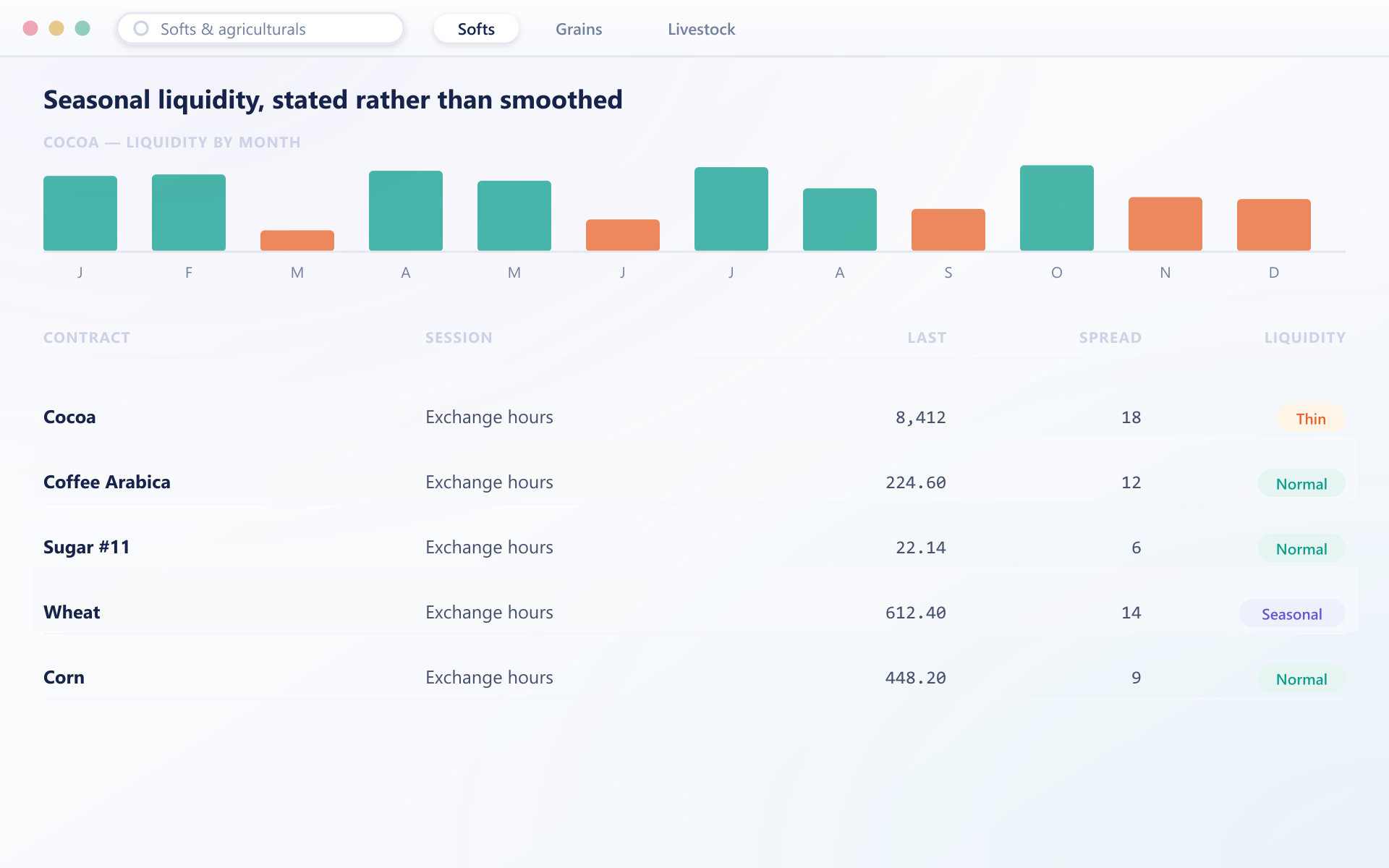
Soft and agricultural pricing, season by season
Every contract quoted with its own liquidity and margin profile, so a thin stretch of the calendar shows up as a thin stretch rather than a flattering average.
Stated plainly
Three realities worth pricing in
Thin is a real state, not a marketing problem
Parts of this complex are illiquid for stretches of the year. A provider quoting through those stretches at a flattering spread is quoting a price that will not survive contact with an order.
The season is a scheduled volatility event
Planting, harvest and reporting dates move these markets on a rhythm that is known in advance. Margin that ignores the calendar is set correctly for most of the year and wrong exactly when it matters.
Supply news arrives without warning
Weather, disease and export policy move a soft contract with no market event to anchor to. That is not a reason to avoid the class, but it is a reason to size positions and set limits with it in mind.
FAQ
Commodities liquidity: common questions
6 short answers to what teams ask before a demo.
Energies are dominated by the contract lifecycle — expiry and rollover define the operational work. Softs are dominated by season and supply news. Both are exchange-bound, but the thing that catches a desk out is different in each.
No, and we would rather say so. Parts of this complex are genuinely thin for stretches of the year. Quoting through that would produce a price list that looks broad and performs badly.
The physical cycle underneath the contract. Planting, growing, harvest and the reports that track them all sit on a known calendar, so the liquidity and volatility profile shifts predictably through the year.
On each contract's own profile rather than a single group figure, so a period of known volatility is reflected rather than averaged away. Collateral still comes from the same consolidated account.
Yes, and rollover is handled the same way as in energies — on a maintained calendar with the cost or credit shown rather than absorbed silently into the client's statement.
The contracts where volume genuinely sits. Ask for the specific ones you want and we will confirm each rather than describe the category, because coverage in this class varies more than in any other except fixed income.
Still have a question?
A specialist will answer it directly, with your set-up in mind.
Ask a specialistAsk for the contracts, not the category
Coverage here varies more than almost anywhere else on the platform. Send the specific contracts you want and we will confirm each one by name.