Asset Classes
Every contract has a date, and the date has a cost
Energy is the asset class where the calendar does most of the work. Nothing about the pricing is unusual; almost everything about holding a position through expiry is.
The contract most of the volume sits in, quoted tightest
Liquidity begins moving to the next contract
Positions move forward, at a cost or a credit set by the curve
The contract stops trading; nothing is left to discover
See it live
Every contract’s expiry, tracked in one list
Active, expiring and rolled contracts priced side by side, so the calendar is visible instead of buried in a footnote.
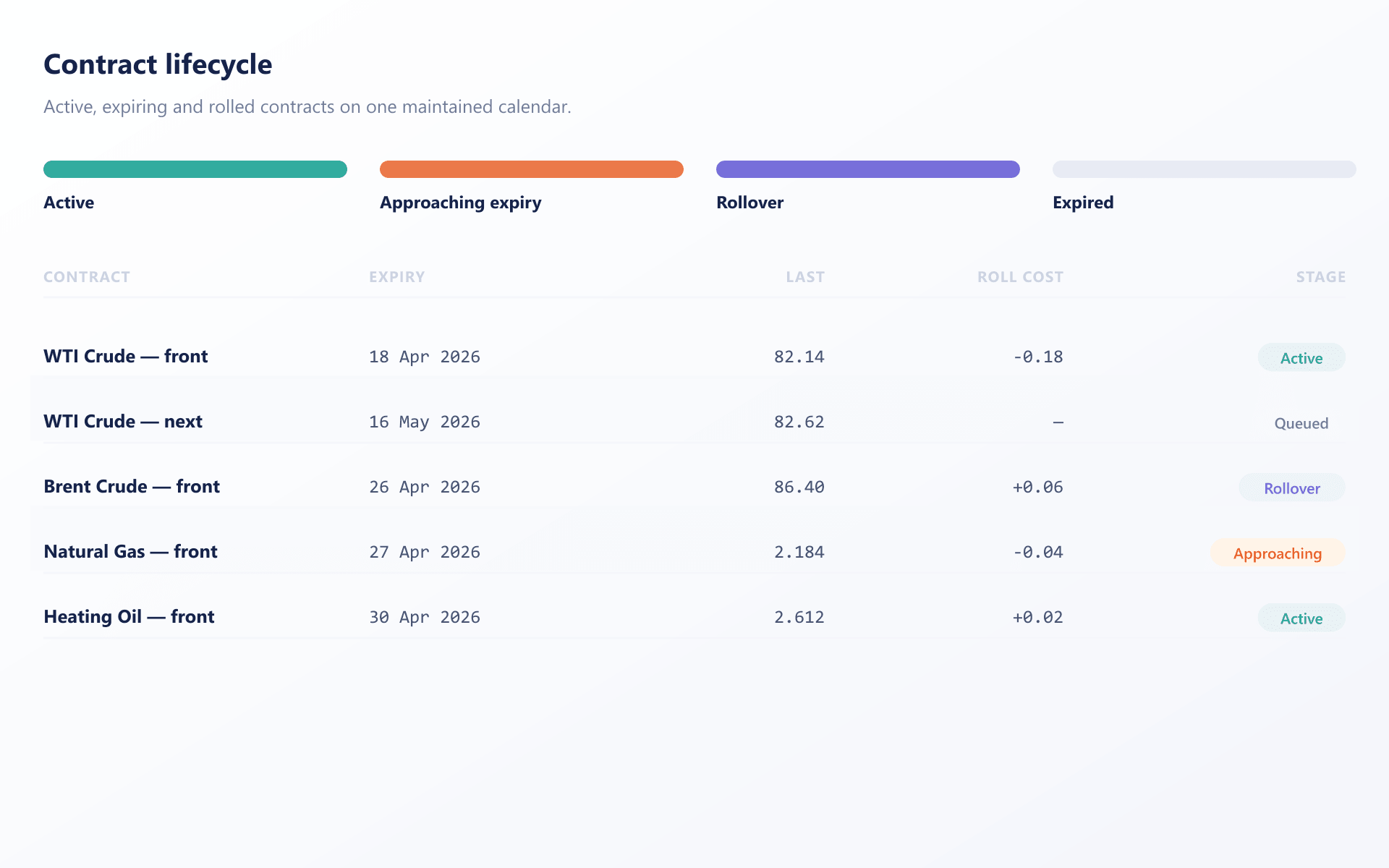
The calendar
Three things that have to be decided before a client asks
Contracts expire, and clients do not expect it
Unlike a currency pair, an energy contract has a date. What happens to a client position on that date has to be decided and published in advance rather than discovered by the client on the morning it happens.
Rollover has a price, and hiding it costs more
Moving a position from one contract to the next carries a cost or a credit depending on the shape of the curve. Presenting the roll as invisible is how a client finds an adjustment on their statement that nobody told them about.
One calendar across the group does not work
Each contract has its own hours and its own holidays. Applying a single calendar to the whole energy complex is the reliable way to let a client place an order into a market that is shut.
FAQ
Energy liquidity: common questions
6 short answers to what teams ask before a demo.
Because the contract lifecycle dominates everything else about them. Expiry and rollover are the operational reality of this class in a way that is not true of the softs, and the handling is different enough to be worth stating separately.
It is rolled to the next contract under a published policy on a maintained calendar, with the cost or credit shown. Nothing about it should be a surprise to the client holding it.
Because the next contract rarely trades at the same price as the expiring one. The difference is real, and depending on the shape of the curve it is either a cost or a credit. Showing it is the only honest way to present a held position.
No, and treating them as though they are is the most common cause of orders arriving into a closed market. Hours and holidays are maintained per contract and applied ahead of the date rather than after a client complains.
On each contract's own volatility and liquidity profile rather than a single group figure, with collateral drawn from the same consolidated account as the rest of the book.
The liquid ones, concentrated in the contracts where volume actually sits. Quoting far out along the curve produces prices that look impressive on a list and widen sharply the moment anybody trades on them.
Still have a question?
A specialist will answer it directly, with your set-up in mind.
Ask a specialistWhat does your rollover policy say today?
If the answer is that nobody has written one down, that is the gap worth closing before the next expiry rather than after it.