Asset Classes
The risk is spread before you place the trade
An index is the one instrument on the platform that arrives already diversified. That single property changes its margin, its gap behaviour and how much operational work a position generates.
Built into the instrument, not something you assemble
Smoothed across constituents rather than concentrated in one
Absorbed by the index methodology, not your position
Often extended well beyond the underlying cash market
See it live
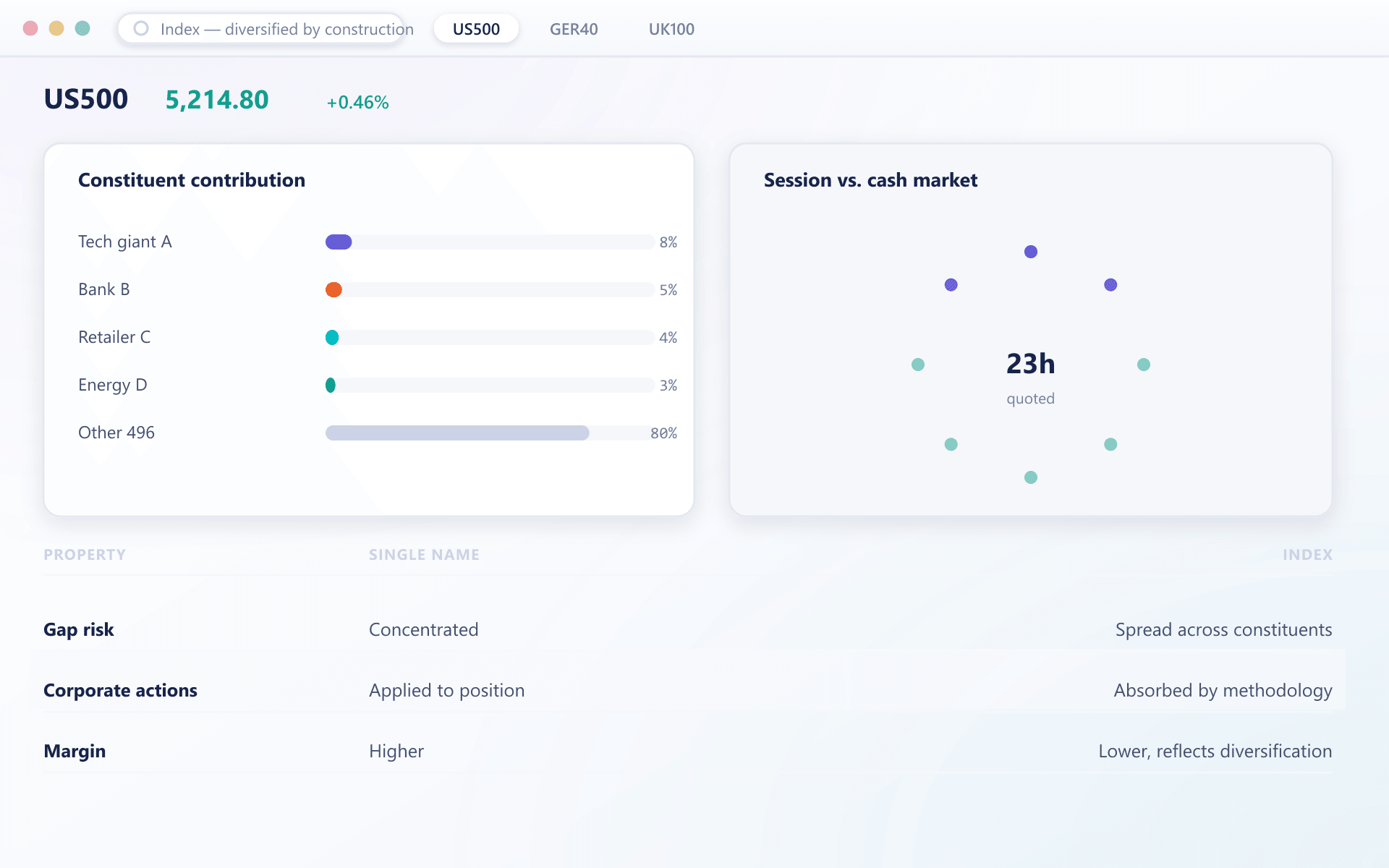
Diversification built into a single ticket
Index exposure priced and margined as the basket it actually is, with extended sessions shown alongside the underlying cash market.
What diversification buys you
Three consequences of holding the basket instead of the name
One company's news barely registers
An earnings release moves the company sharply and the index containing it hardly at all. That is the whole reason index margin sits below single-name margin, and it is a real difference rather than a pricing convention.
Rebalancing happens without touching your position
When the index provider changes constituents or weights, the methodology handles it. Nothing is applied to the client's position and nothing needs explaining, which is the opposite of how single names behave.
The quote often outlives the cash market
Index pricing frequently extends around the underlying session, so a position can be managed when the constituent exchange is closed. Useful, but it also means the price is running on expectation rather than live inputs.
FAQ
Index liquidity: common questions
6 short answers to what teams ask before a demo.
Because an index is diversified by construction and a single company is not. The same piece of news moves one sharply and the other barely, so applying the same requirement to both would be wrong in one direction or the other.
Nothing on the client's side. Constituent and weight changes are handled by the index methodology, so the position continues without an adjustment and without a support question.
They are reflected through the index methodology rather than applied to the position directly, which is one of the main practical differences between holding an index and holding the names inside it.
Because index pricing commonly extends around the cash session. It lets a position be managed outside exchange hours, with the caveat that the price is being formed on expectation rather than on live constituent trading.
Derivative. Clients get the price movement without your firm holding any constituent stock, which avoids custody, settlement and the obligations that come with actual ownership.
They draw on the same consolidated collateral pool but keep their own requirements. A long index and a short constituent inside it are not treated as fully offsetting, because economically they are not.
Still have a question?
A specialist will answer it directly, with your set-up in mind.
Ask a specialistWhich indices do your clients actually ask for?
Coverage and session extension both vary by index. Send the list your clients trade and we will confirm hours and pricing against those rather than a sample.