Asset Classes
Top of book is not the whole story
Every provider’s best price looks similar on a comparison sheet. The difference appears in size, in fast markets and in how many of your orders actually get filled.
Tightest spreads, deepest books, most competitive comparison
Wider but stable; the group where providers genuinely differ
Quoted directly rather than synthesised from two legs
Session-dependent, and honest about when they are thin
See it live
Leverage tiers and swap set per pair, not per group
Majors, minors, crosses and exotics each carry their own rollover and margin configuration, visible before you commit to a size.
What actually differs
Three things a spread comparison does not show you
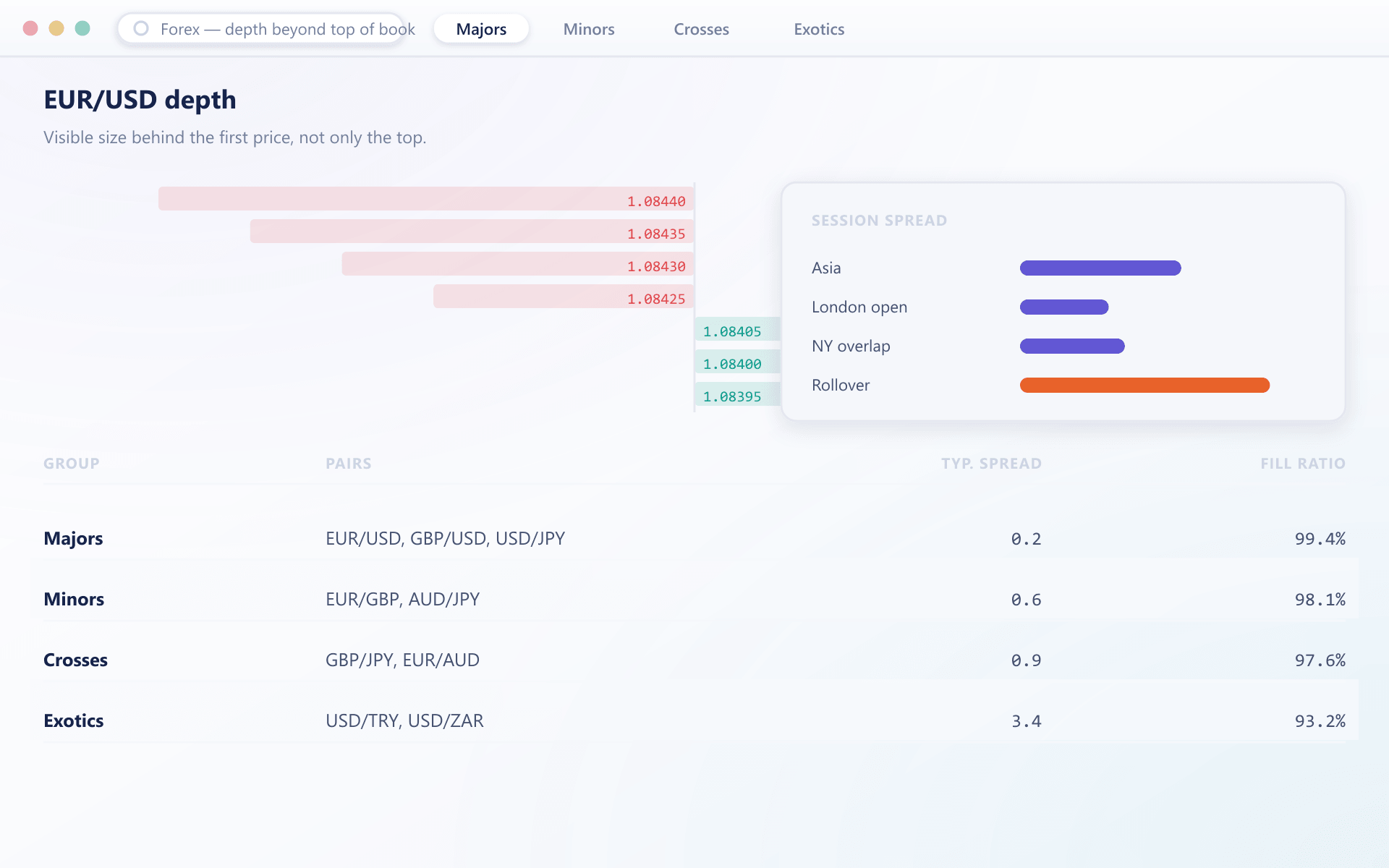
Depth beyond the first price
A quote that looks excellent in one lot and disappears in ten is not the same product. Visible depth lets you see what is behind the top of book before you need it.
Spreads that respect the session
Pricing widens around the rollover and thins in the quiet hours, because that is what the market does. A feed that pretends otherwise is quoting a price it will not honour.
Rejection is a cost too
A tight quote you cannot hit costs more than a slightly wider one you can. Fill ratio is reported alongside spread because only the pair of them describes the real cost.
FAQ
Forex liquidity: common questions
6 short answers to what teams ask before a demo.
On spread, fill ratio and slippage together, in the sizes you actually trade. Comparing headline spread alone reliably produces a decision that looks better on paper and worse in the account.
Depth is available, which matters because a quote that is excellent in one lot and gone in ten is a different product. You should be able to see what is behind the price before you need it.
Yes, rather than synthesised from two legs. A synthesised cross carries the spread of both legs and the execution risk of both, which is why it behaves worse than the arithmetic suggests.
Spreads widen, because liquidity genuinely thins. We would rather show that honestly than quote through it and reject the orders that arrive.
It sits in the same consolidated account, so a currency position and a position in another class net against one collateral pool rather than each demanding their own.
Yes, and it is the only comparison worth making. Send the pairs you trade and the sizes you trade them in, and the quote is against those rather than a representative sample.
Still have a question?
A specialist will answer it directly, with your set-up in mind.
Ask a specialistWhat is your fill ratio today?
If you only track spread, you are measuring half the cost. The other half is the orders that did not fill and the ones that filled somewhere else.