Asset Classes
One line on the ticket, a basket underneath
An exchange-traded fund is the easiest instrument on the platform to trade and one of the least obvious to price, because everything that matters about it is happening one level down.
Whole-market exposure in a single instrument
Concentrated by industry, and volatile in the way that implies
Bond baskets that carry the duration of what they hold
Physically backed or futures backed, and the two behave differently
See it live
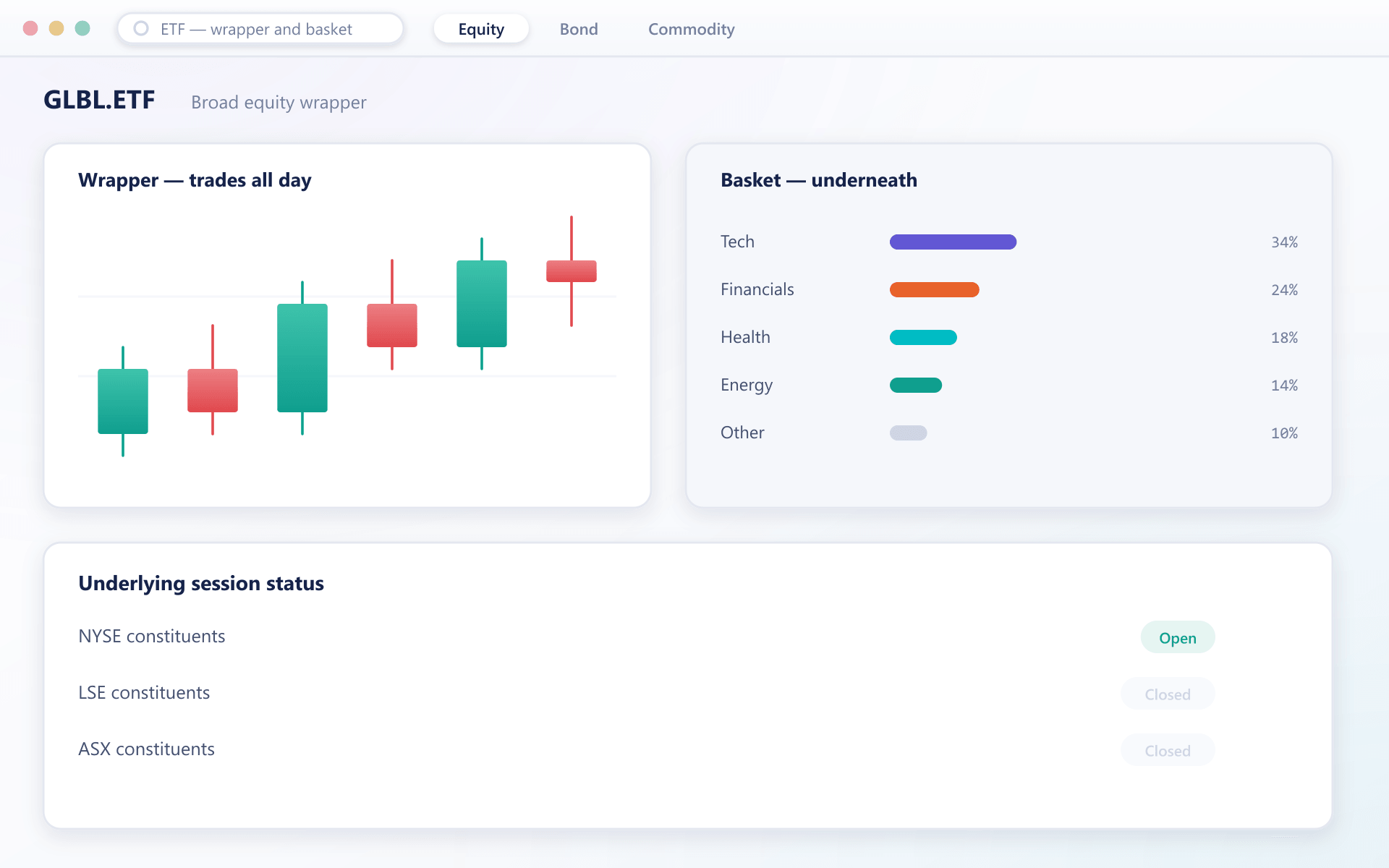
The wrapper and the basket, both visible
Equity, bond, commodity and sector funds quoted alongside the spread the underlying basket actually supports.
One level down
Three things the wrapper hides
The wrapper is liquid, the basket may not be
A fund can trade actively all day while the instruments inside it barely move. In calm conditions the difference is invisible; in fast conditions it is the whole story, and it shows up as a spread that widens more than the headline suggests.
The underlying keeps its own hours
A fund holding instruments that are closed is being priced on expectation rather than on live inputs. That is not a defect, but it does mean the quote behaves differently outside the underlying market's session.
Distributions are a cash event, not a price move
When a fund distributes, the price adjusts and cash arrives. A position that looks like it lost value on the day did not, and the account should show both halves rather than only the visible one.
FAQ
ETF liquidity: common questions
6 short answers to what teams ask before a demo.
Because it behaves like one. The instrument trades like a single equity line but carries the risk of everything inside it, and the margin, session and distribution treatment all follow the basket rather than the wrapper.
Directly. A fund whose holdings are liquid and open quotes tightly; one whose holdings are thin or closed does not. Comparing two funds on headline spread without knowing what sits inside them is comparing two different products.
The price adjusts and the cash amount is credited, so the position economics are unchanged. Both halves are shown in the account, because a price drop with no matching credit visible is the most common support question this asset class produces.
Yes, because the two common structures behave differently. A physically backed fund tracks the spot market closely; a futures-backed one carries roll cost that accumulates over time and can separate the fund's return from the commodity's.
On the risk of what the fund holds rather than on the fact that it trades as one line. A concentrated sector fund and a broad market fund are not the same exposure and are not margined as though they were.
Yes. Coverage in this class varies between providers more than in equities, so send the specific funds you want quoted and we will confirm each one rather than describe the category in general.
Still have a question?
A specialist will answer it directly, with your set-up in mind.
Ask a specialistSend us the funds, not the category
Two funds tracking the same market can quote very differently depending on what they hold and how they are built. We will confirm each one by name.