Asset Classes
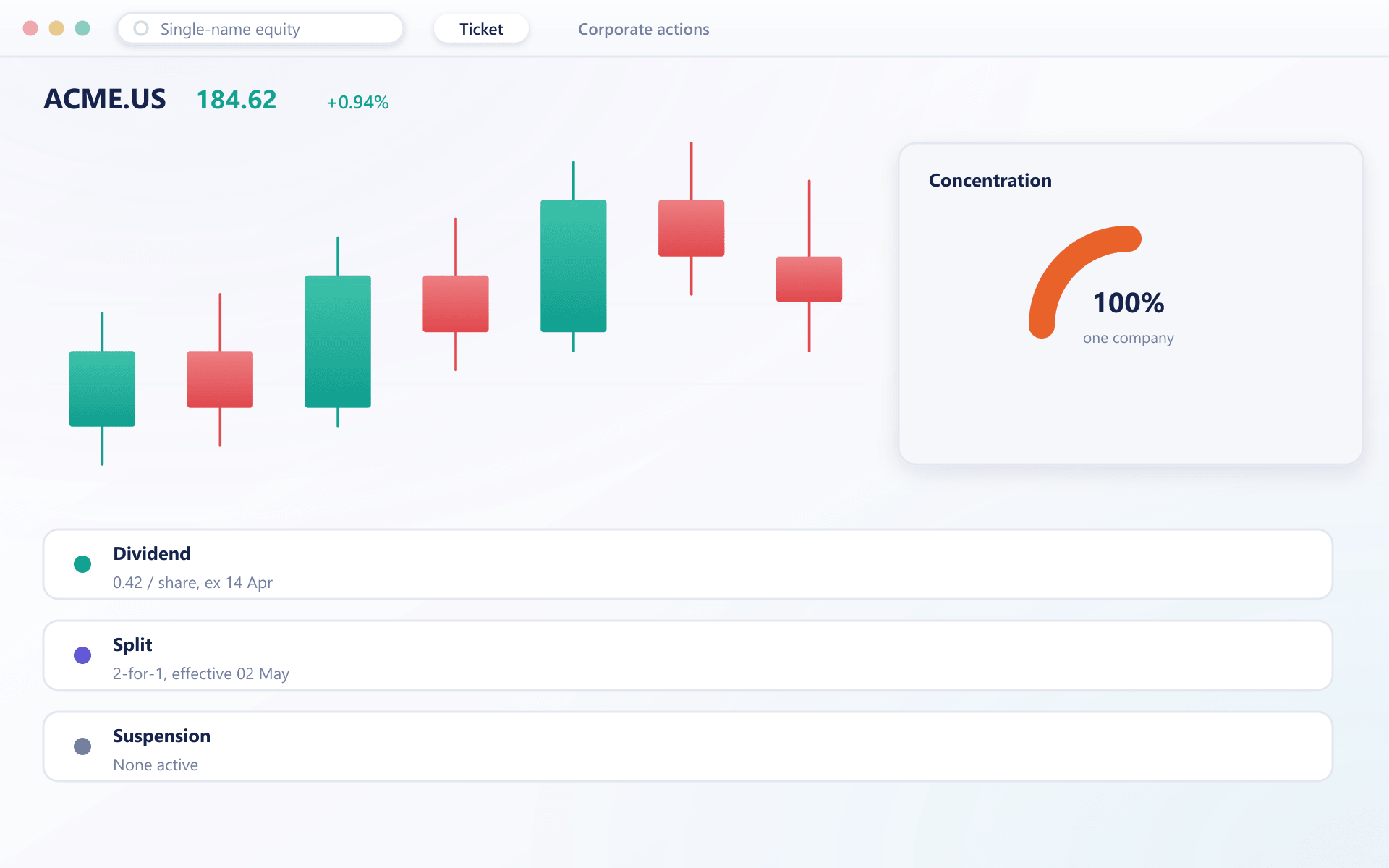
Concentration is the whole risk profile
A single name carries risk an index does not, and it generates operational work an index does not. Both of those follow from the same fact: there is exactly one company behind the position.
None. The whole position is one company
An earnings release moves it alone, and moves it hard
Higher than an index, reflecting that concentration
Bound to the listing exchange, with no extension
See it live
Single names, quoted with their own margin
Concentration priced honestly against an index, with dividends, splits and suspensions reflected before a client has to ask.
Corporate actions
The three that generate support contact if handled late
Dividends adjust the position
A holder of a long position receives an adjustment; a short pays one. Applied on the ex-date from a maintained calendar rather than in response to a client asking why their balance moved overnight.
Splits and consolidations are restated
Position size and average price are both adjusted so the economic exposure is unchanged. Handling this after the fact means every affected client sees a position that appears to have multiplied, and they all ask at once.
Suspensions follow a written policy
Trading halts and existing positions are handled under a policy decided in advance. This is the case nobody plans for, and it is the one where an improvised decision turns into a complaint.
FAQ
Equity liquidity: common questions
6 short answers to what teams ask before a demo.
Because there is no diversification in the instrument. One company's earnings release moves its own price sharply and barely registers on the index containing it, and margin should reflect that rather than average across both.
As an adjustment on the ex-date from a maintained calendar. Long positions receive, short positions pay. Doing this reactively means clients see an unexplained balance movement first and get the explanation second.
Position size and average price are restated so the economic exposure is unchanged. Handling it late produces a position that looks like it multiplied overnight, which generates support contact from every affected client simultaneously.
Trading halts and existing positions are handled under a stated policy rather than an improvised one. It arrives without warning, which is exactly why the decision belongs in advance.
Derivative. Your clients get the price movement without your firm holding stock, which avoids custody, settlement and the shareholder obligations that come with actual ownership.
The liquid ones on covered exchanges. Coverage is decided per listing, so it is worth checking the specific names your clients ask for rather than assuming a whole exchange is included.
Still have a question?
A specialist will answer it directly, with your set-up in mind.
Ask a specialistCheck the names, not the exchange
Coverage is decided per listing, so an exchange appearing on a list does not mean every name on it is quoted. Send the ones your clients ask for.