Asset Classes
The one market that does not stop on Friday
Everything else in a multi-asset book closes for the weekend. This does not, which means your risk arrangements have to work on a Sunday whether or not anybody is at their desk.
Direct exposure, settled into your consolidated account
Leveraged exposure without holding the underlying asset
The deepest and most continuously quoted instruments
Available where depth genuinely supports quoting
See it live
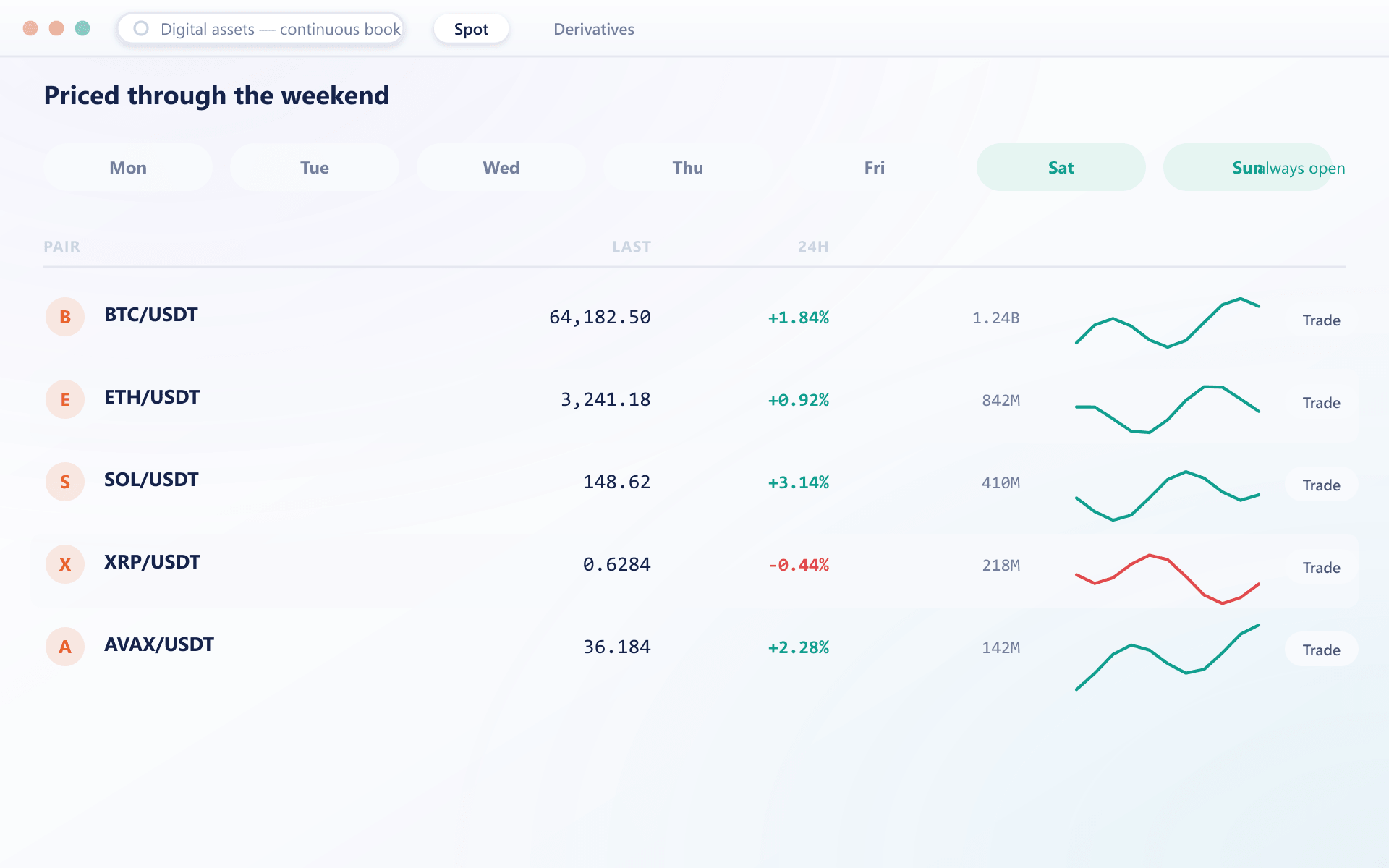
Spot and derivatives, quoted around the clock
The order book that never closes for the weekend, with majors and secondary assets priced continuously from the same account.
Three real differences
Not marketing distinctions — operational ones
It never closes
There is no weekend gap to price around and no session to widen into. Everything else in a multi-asset book stops on Friday; this does not, and your risk arrangements have to account for that.
Volatility is structural, not exceptional
Moves that would be a notable event in currencies are an ordinary Tuesday here. Margin requirements reflect that rather than treating it as a temporary condition.
Margin is deliberately separate
Digital asset exposure is margined on its own terms rather than at the rate applied to currencies, because netting them at a common requirement understates the risk in one and overstates it in the other.
FAQ
Digital asset liquidity: common questions
6 short answers to what teams ask before a demo.
No. Derivative exposure gives your clients the price movement without your firm taking custody, which removes an entire category of operational and regulatory obligation.
Pricing continues, because the underlying market does. What it means for your desk is that risk positions carry across a weekend when every other asset class is closed, which is a policy question worth settling before you list it.
Because the volatility genuinely is. Applying a common requirement across both understates the risk in digital assets and overstates it in currencies, which is worse for you and worse for your clients.
It sits in the same consolidated account with its own margin treatment. Collateral is shared; the requirement is calculated appropriately for each class rather than at a single blended rate.
The majors continuously, and secondary assets where depth genuinely supports quoting. We would rather decline to quote something than show a price that will not fill in size.
Differently, and the distinction matters. This is trading exposure. Accepting digital assets as client funding is a payments question and lives in PayVault instead.
Still have a question?
A specialist will answer it directly, with your set-up in mind.
Ask a specialistWho is watching on Sunday?
Listing a market that trades through the weekend is a risk decision before it is a product decision, and it is worth settling first.