Features
Three layers of limit, and yours wins
Copying multiplies one trader’s decisions across many accounts. That is the product and it is also a correlated exposure that no individual follower can see.
See it live
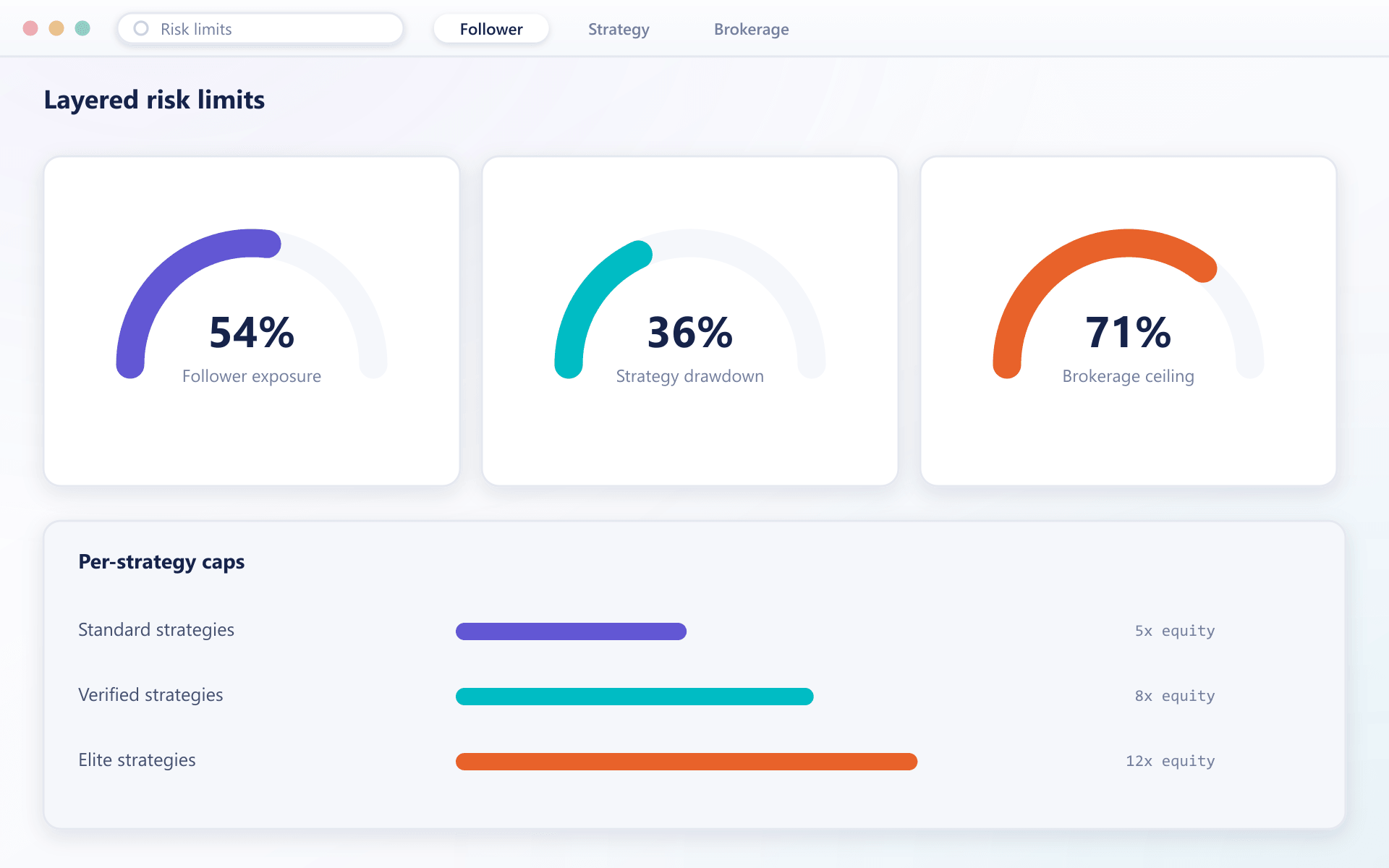
Three limits, one gauge each
Follower, strategy and brokerage limits read as separate gauges so you can see at a glance which layer is closest to its ceiling, rather than digging for the number.
The three layers
Each set by a different party, applied in order
Follower
Set by The investor
A drawdown ceiling, a maximum position size and instruments to skip. Their protection, configured by them, and the reason a bad month ends in an unsubscribe rather than a complaint.
Strategy
Set by You, per provider
Caps on how much total capital may follow one strategy and how much exposure it can generate. A provider attracting serious money becomes a concentration whether or not anyone intended it.
Brokerage
Set by You, across everything
Firm-level limits that apply regardless of what a follower or a provider configured. These win, always, because the correlated exposure a copy programme creates is your risk rather than theirs.
Why the top layer exists
A popular strategy is a commercial success and a concentration
One decision, many accounts
That is the product. It also means one trader's mistake arrives in a hundred accounts at once, and the resulting exposure is correlated in a way ordinary client flow is not.
Popularity is a risk metric
A strategy attracting capital fast is a commercial success and a growing concentration. Both facts are true simultaneously and the second one is easier to overlook.
The cap has to exist beforehand
Limiting how much may follow one strategy is uncomfortable to introduce after a provider has become popular. Setting it at the start is a policy; setting it later feels like a penalty.
FAQ
Risk limits: common questions
6 short answers to what teams ask before a demo.
Yes — a drawdown ceiling, a maximum size and instruments to exclude. It matters commercially as well as prudentially: a follower with an automatic stop leaves the strategy rather than complaining about the platform.
Copying stops automatically and they are notified. Whether open positions close is their configuration. The important part is that it happens without anybody having to be watching.
Yes, and you should set it before a provider becomes popular. A cap introduced afterwards reads as a penalty for success; one that existed from the start is simply the policy.
Because the correlated exposure a copy programme generates is your risk, not theirs. A hundred accounts taking the same position simultaneously is a concentration that no individual follower is in a position to see.
These are programme limits inside copy trading. Firm-wide exposure across every client, including the correlated positions this programme creates, sits in RiskDesk.
That is your choice. Most firms disclose it, because a provider who discovers a cap when they hit it is a provider who starts looking at other platforms.
Still have a question?
A specialist will answer it directly, with your set-up in mind.
Ask a specialistWhat if your most popular strategy has a bad day?
Work out the total exposure it would generate. That number is the reason the brokerage layer exists, and it should be set before you need it.