Operations
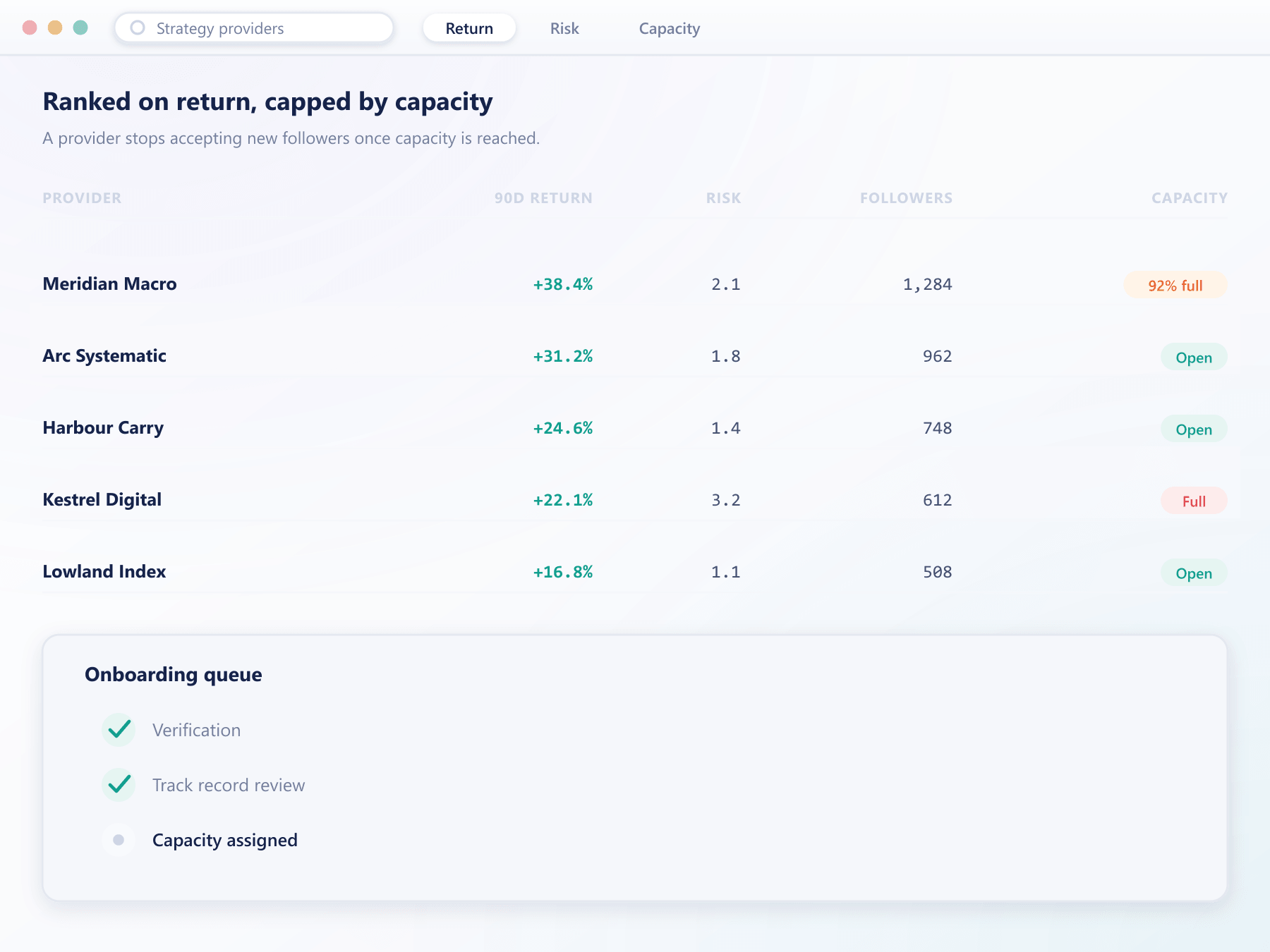
Ranking by return alone rewards the reckless
Whoever took the most risk sits at the top of that list, attracts the most followers, and eventually delivers the drawdown that was always implied by how they got there.
Obvious, and on its own it rewards whoever took the most risk
The number that separates a strategy from a lucky streak
Three months of results is not a record, it is a sample
Whether returns are spread or came from two days
What people who actually copied them experienced
See it live
A ranking a provider can verify for themselves
Return, drawdown and follower count sit together on one leaderboard, built from the same fills a provider can check against their own account.
From applicant to retained provider
Four stages, and the last one is the one firms neglect
- 1
Apply
A trader requests provider status. You decide what qualifies — a minimum track length, a verified account, or an invitation-only programme.
- 2
Verify
The record is taken from actual trading on the platform rather than from a submitted statement. A screenshot is not a track record.
- 3
Publish
The strategy becomes visible with its full history including the bad periods, and the fee structure that applies to it.
- 4
Retain
Earnings visibility, follower analytics and a dashboard worth opening. A provider who cannot see what they are earning starts looking elsewhere.
FAQ
Strategy providers: common questions
6 short answers to what teams ask before a demo.
Not by return alone, which reliably promotes whoever took the most risk in the recent period. Drawdown, track length and consistency belong in the ranking, because those are the factors that distinguish a strategy from a streak.
Any ranking can be. The defence is weighting factors that are hard to fake over time — length of record and drawdown behaviour — rather than headline return, which is easy to produce once with enough leverage.
It is taken from actual trading on the platform, not from a submitted statement. Anything a provider could edit before sending it is not a track record.
You should. Investors who discover a hidden drawdown after subscribing do not blame the provider, they blame the platform that showed them a curated version.
Fair fee splits, earnings they can see in real time, and analytics on their following. Providers are portable and the ones worth having know it.
Yes. Some firms prefer a small curated set over an open marketplace, and it is a legitimate model — it trades breadth for quality control and considerably less moderation work.
Still have a question?
A specialist will answer it directly, with your set-up in mind.
Ask a specialistWho would top your leaderboard today?
Run it on return alone, then run it with drawdown and track length weighted. If the answer changes, the first version was going to cost you.