Platforms
An established book deserves careful hands
A platform that has been running for years is not a problem to be solved. It is an asset with undocumented history attached. The work is to understand what is there before changing any of it.
See it live
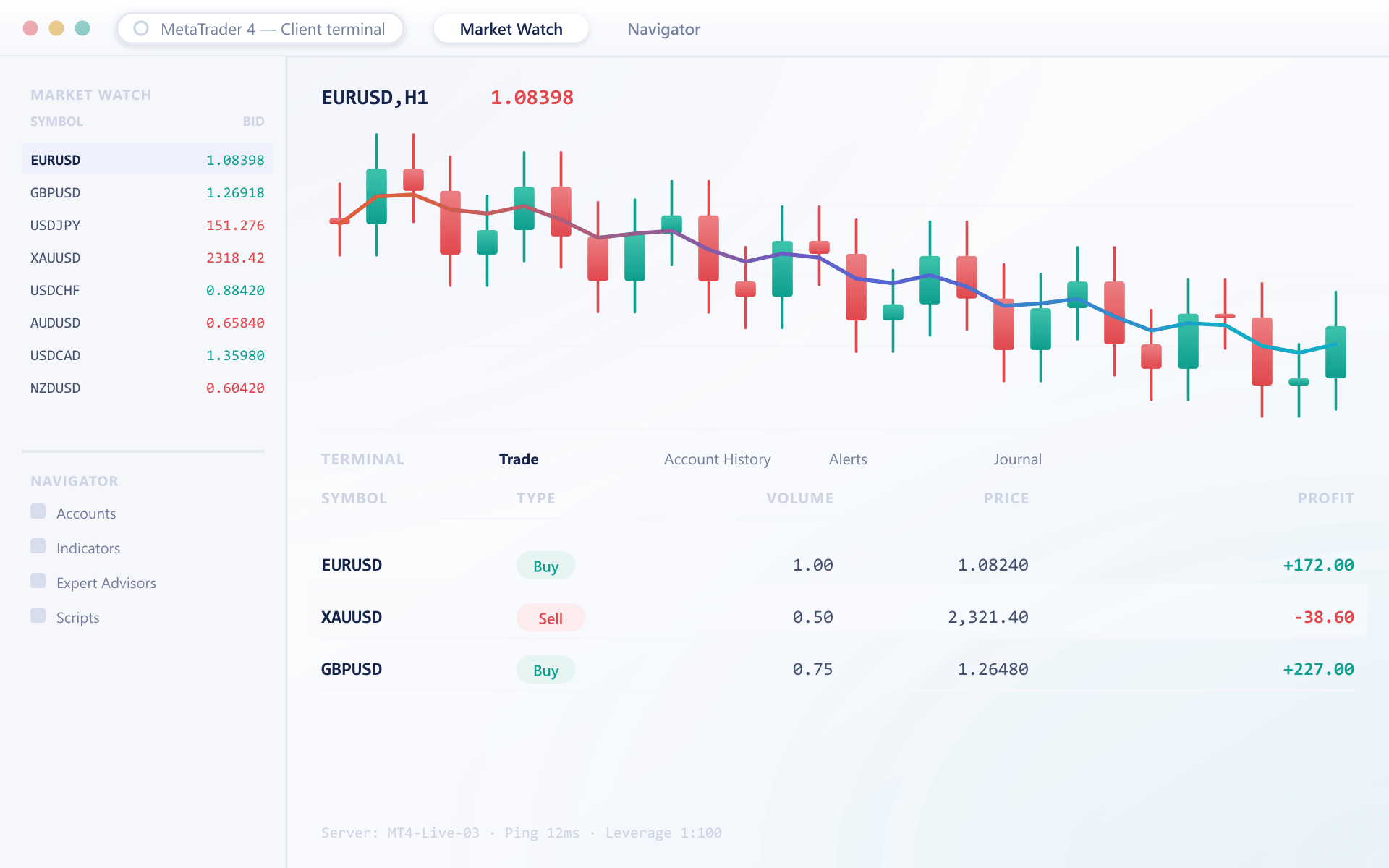
The platform underneath changes. This does not.
Whatever gets rebuilt behind it — plugins, symbol trees, group policy — the terminal a trader opens every morning looks exactly as it did the day before.
What you inherit
Three things every long-lived environment is carrying
Changes nobody wrote down
A server that has been running for years carries adjustments made by people who have since left. The first job is to find out what is actually configured, not what the handover document claims.
Code you cannot see inside
Server-side plugins alter behaviour in ways that are invisible from the configuration. Each one gets identified, tested against a copy, and either kept deliberately or removed deliberately.
Settings that stopped matching reality
Swap rates, session times and instrument specifications that were correct at launch and have not been revisited. This is where most of the quiet money leaks.
Change control
Four steps between an idea and the live server
On a settled book the cost of a bad change is much higher than the cost of a slow one.
- 1Snapshot
Before any change, the current state is captured — configuration, symbol specifications and group settings — so there is a known point to return to.
- 2Rehearse
Anything with a blast radius is applied to a copy of the environment first. If the change touches instrument economics, the effect on open positions is calculated before it goes near production.
- 3Apply
The change is made in an agreed window, by a named engineer, with the reversal step written down before the first click rather than improvised afterwards.
- 4Record
What changed, when, who approved it and how to undo it is written to a log you can read without asking us for it.
If you decide to move
A migration is four phases, and only one of them happens on the night
Is moving worth it
Some books should stay where they are. We look at instrument coverage, client behaviour, plugin dependencies and what would genuinely improve before recommending a move.
Rebuild the structure, not copy it
A migration is the one chance to fix a symbol tree and group policy that grew organically. The target is modelled from how you trade now, not from what the old server happens to contain.
Run the cutover before the cutover
The full sequence is performed against a copy, including history carry-over and position reconciliation, and timed. The live cutover then has a known duration rather than an estimate.
In a closed market, with a way back
The move happens in a weekend window with the old environment left intact and reachable until reconciliation has been signed off on the other side.
What carries across
And how each part is handled
Reconciled position by position, signed off before clients reconnect
Matched against the ledger on both sides, differences investigated not adjusted
Carried where the target supports it, archived and queryable where it does not
Re-issued through a controlled reset rather than transferred
Rebuilt from a reviewed model, mapped back to the original for comparison
FAQ
MetaTrader 4 administration: common questions
6 short answers to what teams ask before a demo.
Often, yes. A book with settled clients, working integrations and instruments that suit it does not become better by being moved. The argument for migrating should come from something specific you cannot do today, not from the age of the software.
We identify what is loaded, observe its behaviour against a copy of the environment, and document what it appears to affect. Where a plugin came from a vendor who is no longer contactable, we can usually determine whether its behaviour is still needed.
Routine upkeep — session calendars, holiday schedules, corporate actions, monitoring adjustments — proceeds under standing approval. Anything affecting leverage, margin, swaps or instrument economics is confirmed with you before it is applied.
They are reconciled individually and signed off before clients are allowed to reconnect. The old environment stays intact and reachable until that sign-off happens, so there is always a way back.
The cutover itself is a weekend window whose duration is measured during the rehearsal rather than estimated. The preparation before it is the longer part, and depends mostly on how much of the existing configuration is undocumented.
Yes, and it is usually the safer path. Both environments are administered under the same change control and connected to the same providers, so pricing and routing behave consistently while the client base moves across.
Still have a question?
A specialist will answer it directly, with your set-up in mind.
Ask a specialistFind out what your server is actually configured to do
We document the current state first. Whether anything changes afterwards is your decision, not a condition of the review.