Languages
A language and a locale are not the same thing
Shipping one Portuguese to both Brazil and Portugal is noticed immediately by whichever market did not get its own. Regional variants are not a refinement; they are the difference between local and foreign.
See it live
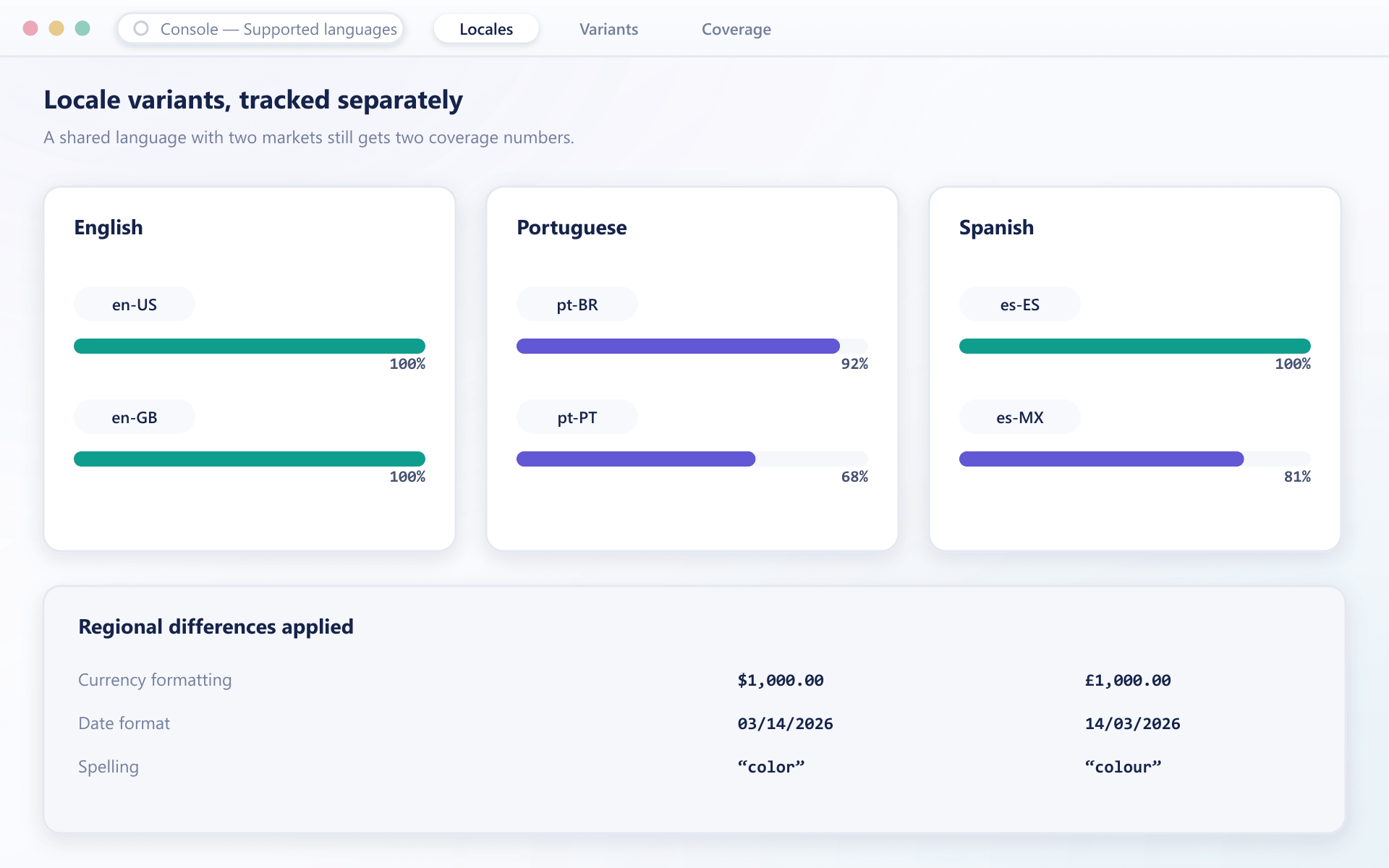
Every locale and regional variant, one console
Coverage is tracked per locale tag, not per language, so pt-BR and pt-PT show up as the two separate markets they actually are.
Three things that matter
More than the count on the marketing page
Standards-based tags
Locales are identified using the accepted international tag format rather than a two-letter code someone chose. It is what allows a regional variant to exist at all without ambiguity.
Fallback down the chain
An untranslated string in a regional variant falls back to the base language, then to your default — never to a raw key. A partially translated locale stays usable while it is completed.
Locale is not only language
Number grouping, decimal separators, date order and currency placement follow the locale independently of the words, and getting them wrong is noticed faster than a clumsy sentence.
FAQ
Supported languages: common questions
6 short answers to what teams ask before a demo.
The current figure is 30+ including regional variants, and it moves as languages are added. The more useful question is whether the specific markets you are entering are covered, which is worth checking directly.
Because regional variants are genuinely different. Portuguese for Brazil and for Portugal diverge in vocabulary and convention, and shipping one to both markets is noticed immediately by the one that did not get its own.
They fall back to the base language and then to your default, never to a raw key. A locale that is eighty per cent complete stays usable while the rest is finished, rather than showing identifiers to clients.
Yes. Adding a locale is a configuration action, and the translation work can be done by your own team, your agency or machine-assisted drafting with your review. You are not waiting on us to enable a market.
No, and conflating them is a common source of trouble. A locale also governs number formatting, date order and currency presentation, which clients notice faster than an awkward sentence.
Yes. The initial language resolves from the client group default and the browser or device preference, and the client can override it. Their choice then follows them across every surface.
Still have a question?
A specialist will answer it directly, with your set-up in mind.
Ask a specialistWhich markets are you entering next?
Tell us and we will confirm exactly which variants are covered rather than pointing you at a total.