Platform
Fixing a typo should not require a release
When copy lives in the codebase, correcting one word costs a deployment. So it waits, and a small error stays in front of clients for weeks because fixing it is disproportionate.
An application pins a version and moves when it chooses to
Served locally after first fetch; the network is not in the render path
A packaged copy ships with the app, so it works offline and on first load
Variant to base language to default — never a raw key on screen
A published set arrives whole rather than string by string
See it live
Publish a fix, watch it land without a deploy
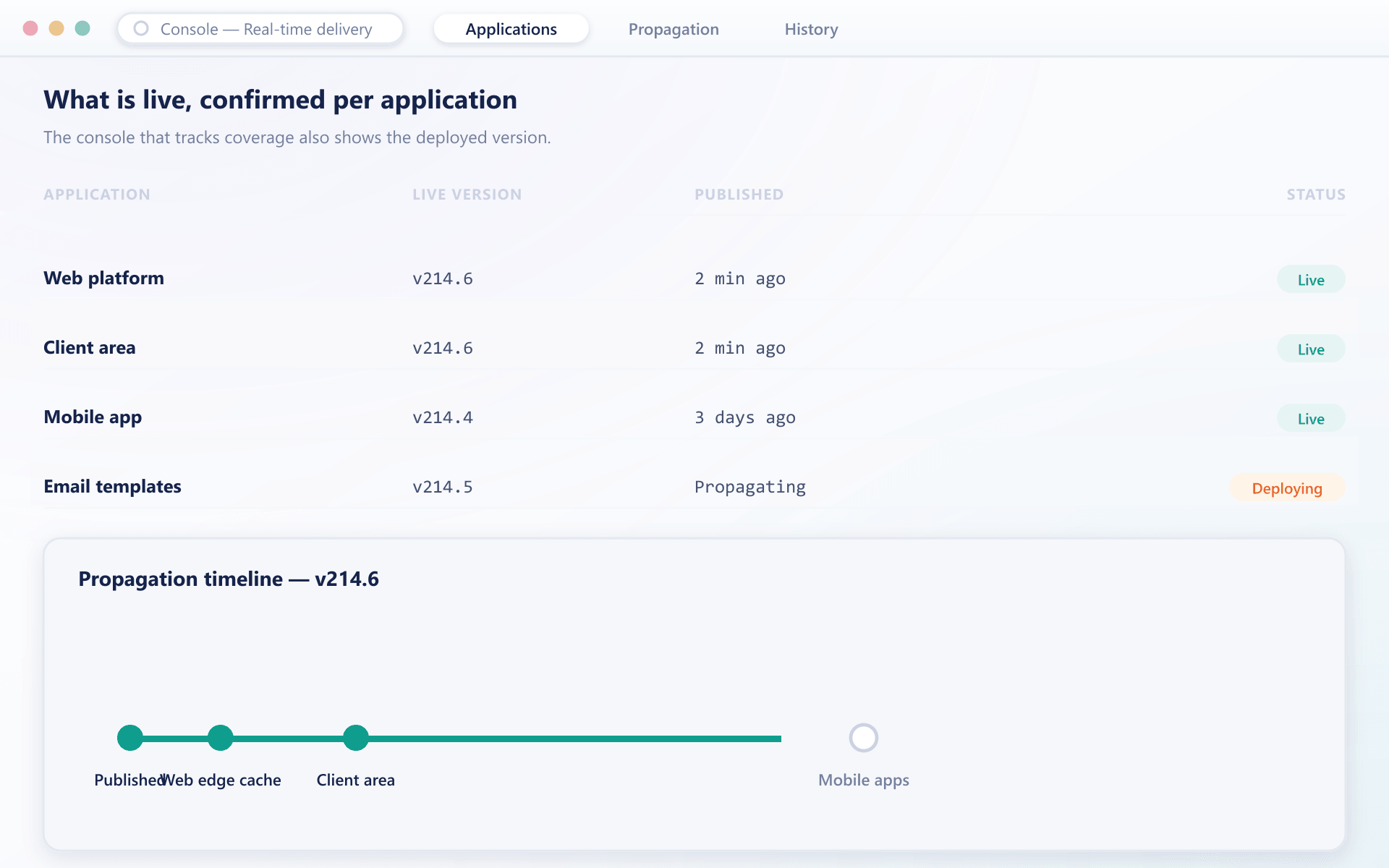
The same console that tracks coverage shows the version currently live for each application, so you can confirm delivery rather than assume it.
What protects the application
Live delivery must never become a dependency that can take you down
The network is never in the render path
Copy is cached locally and refreshed in the background. If the delivery endpoint is unreachable, the application renders the last known set rather than waiting or showing blanks.
First load is covered
A packaged fallback ships with the application, so the very first render on a new device has real copy rather than a flash of identifiers while a fetch completes.
A set arrives whole
Publishing is atomic. Clients never see a screen where half the strings are the new wording and half are the old, which is what string-by-string delivery produces.
FAQ
Delivery: common questions
6 short answers to what teams ask before a demo.
In seconds rather than at the next release. The practical point is not the exact figure — it is that publishing copy is decoupled from deploying software entirely.
No, and that is the main reason this exists. Correcting a word in a client-facing message should not wait for a deployment window, because when it does the error simply survives for weeks.
The application uses its cached set, and behind that a fallback bundle that shipped with it. The network is never in the render path, so an outage in delivery does not become an outage in your product.
Yes. An application requests a specific version and moves when you decide to, which means a copy change cannot alter the behaviour of a release you have already tested.
No. Publishing is atomic — a set arrives whole. Delivering string by string produces screens mixing old and new wording, which looks like a fault rather than an update.
Yes, with the same caching and bundled fallback. It is arguably more valuable there, since a copy fix that would otherwise wait for an app store review can instead land immediately.
Still have a question?
A specialist will answer it directly, with your set-up in mind.
Ask a specialistHow long would a typo fix take you today?
Count the deployment window, not the edit. That gap is what this removes, and it is usually larger than people expect.