Platform
A half-translated product reads worse than an English one
An English product is a deliberate choice. A product that switches to English halfway through looks broken, and the client remembers the switch rather than the translation.
See it live
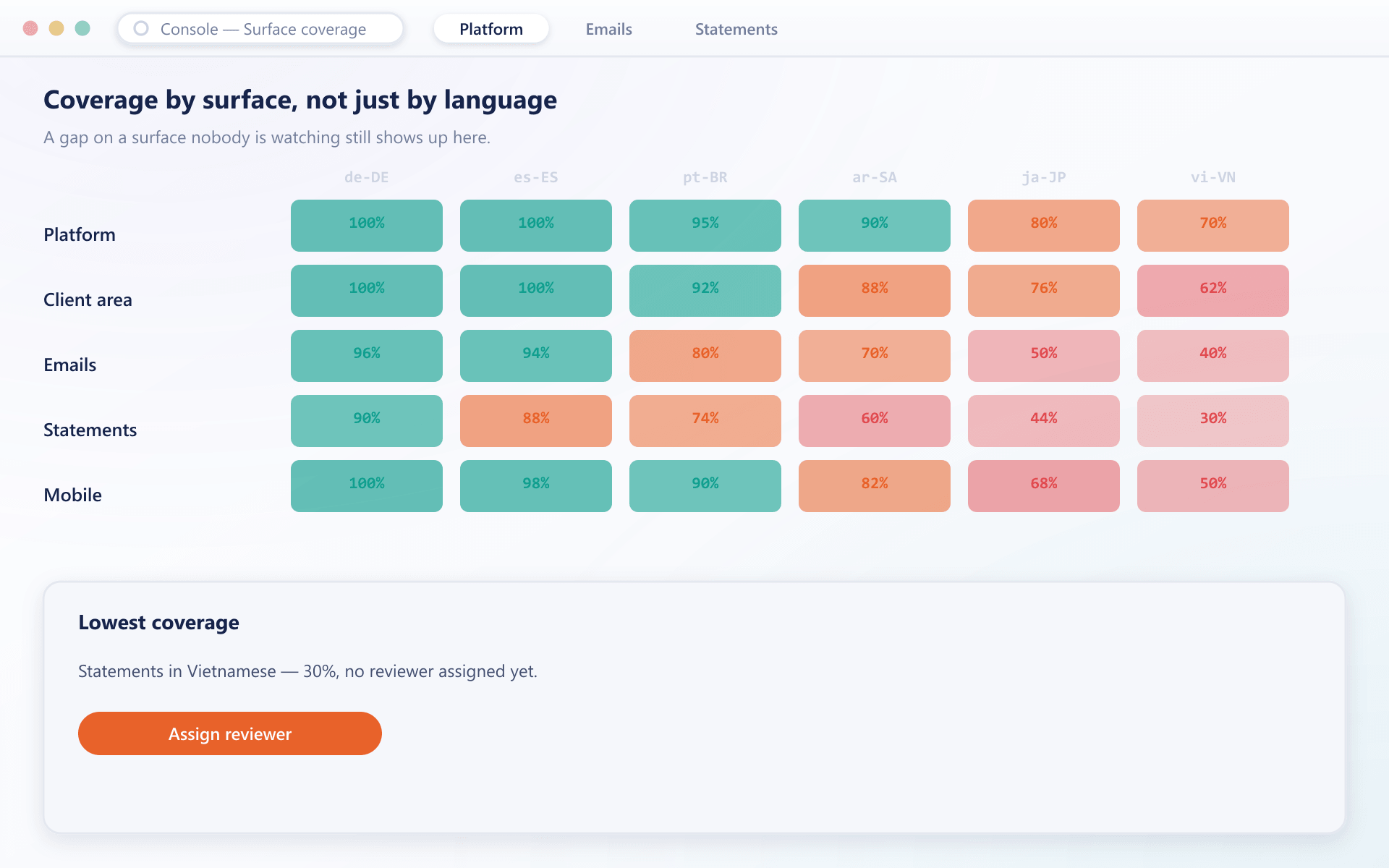
One coverage view across every surface
Platform, client area, emails and statements all report into the same console, so a gap on the surface nobody was watching is still visible.
The three that get forgotten
And each one is read more carefully than the interface
Emails outlive the session
A client closes the interface and keeps the email. An English confirmation arriving after a fully translated journey is the moment the localisation stops being believed.
Statements are read carefully
Nobody skims a statement. It is the document clients examine most closely and forward to accountants, and it is routinely the last thing anyone translates.
Error messages are the worst place to fall back
An untranslated error reaches a client at the exact moment they are already confused. Coverage that stops before the failure paths is coverage of the easy half.
FAQ
Surface coverage: common questions
6 short answers to what teams ask before a demo.
Email. A client completes a fully translated journey and then receives an English confirmation, which is the moment they stop believing the rest of it. Statements are a close second.
Yes, from one source. Maintaining a separate set for emails or documents guarantees they drift, and the drift always shows up on the surface nobody was watching.
Yes. This is a localisation platform that our products happen to use rather than a feature of them, so anything you build can draw from the same keys, workflow and delivery.
The client's, from their stored preference — not the firm's default. Statements are read carefully and forwarded to third parties, which makes them a poor place to fall back to English.
They are, and they matter more than most copy. An untranslated error reaches a client at the moment they are already confused, so coverage that stops before the failure paths has covered only the easy half.
Untranslated keys are listed per locale and per surface, so the gap is a specific list rather than a completion percentage. A percentage tells you there is work left; a list tells you what it is.
Still have a question?
A specialist will answer it directly, with your set-up in mind.
Ask a specialistSign up in one of your own languages
Go all the way through to the first statement. The point at which it switches back to English is the honest measure of your current coverage.