Workflow
Machine translation is a first draft, not an answer
It is very good at the mechanical half and unreliable on the half that matters. In a financial interface the unreliable half is precisely where the risk lives, so it drafts and a person decides.
See it live
A draft that already knows your glossary
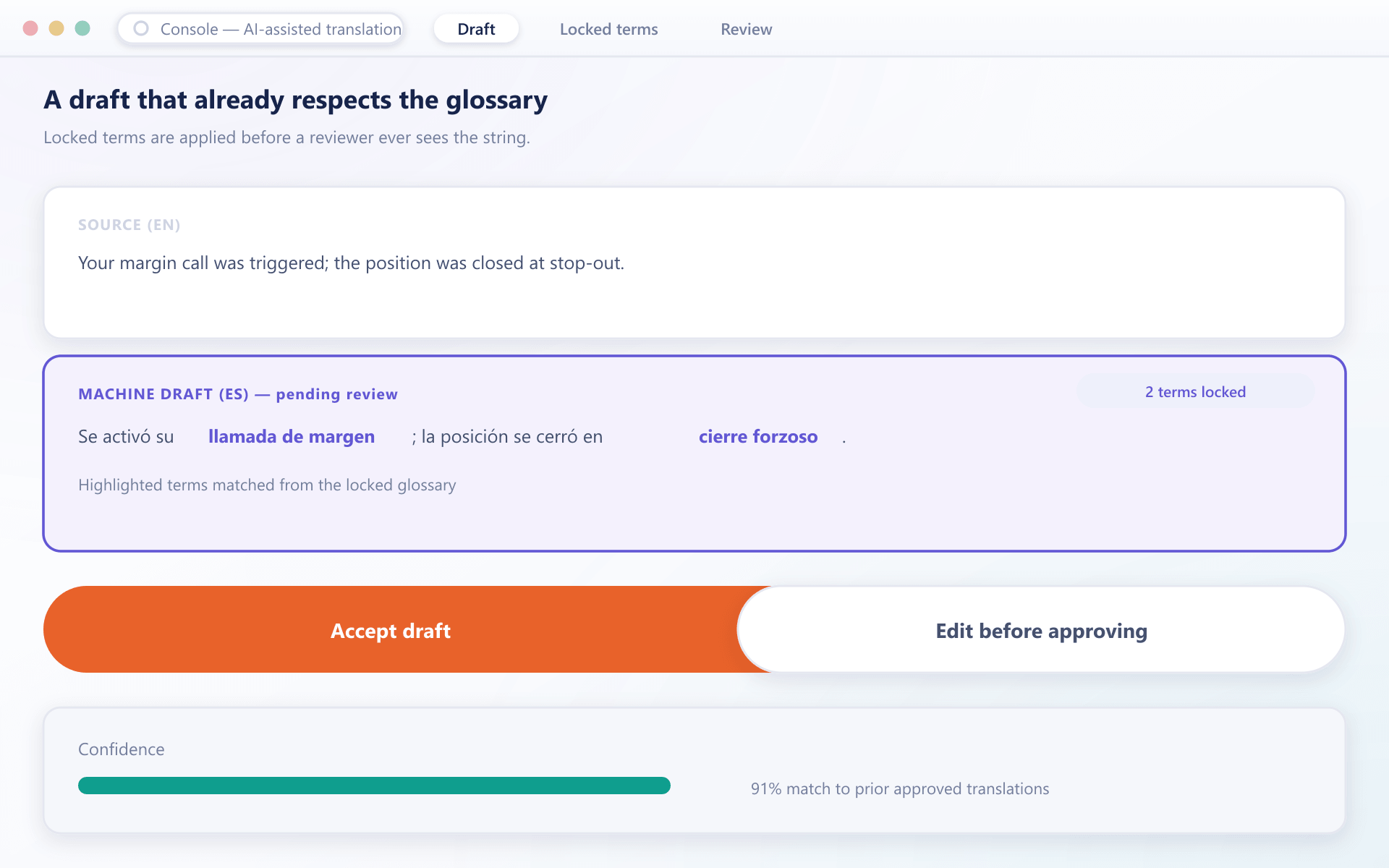
The review panel shows the machine draft against the locked terms it already applied, so a reviewer starts from something close rather than a blank field.
What the draft is given
Context is the whole difference from a general translation tool
Locked and preferred terms are applied before the draft is produced
A button label is drafted differently from a paragraph
Drafts stay within what the interface can actually display
Prior approved copy sets the register and tone
Placeholders are preserved rather than translated
Being honest about it
Where it helps, where it does not, and where it is never trusted
Good at volume and consistency
A thousand strings drafted in minutes, using your terminology, with placeholders intact. As a starting point this removes most of the mechanical work.
Unreliable on nuance and register
It cannot tell you whether the tone suits a market or whether a phrase carries an unintended implication locally. Those are the things reviewers are for.
Never trusted on regulated wording
Locked glossary terms are applied rather than generated, and anything carrying legal weight goes to a named approver. A machine draft is not a defence.
FAQ
AI-assisted translation: common questions
7 short answers to what teams ask before a demo.
No. A draft always routes to a human before publication. Machine translation is genuinely good at volume and consistency and unreliable on nuance, and in a financial interface the nuance is where the risk sits.
Because it is given context — your glossary, where the string appears, its length constraint and your existing approved copy. A general tool sees a sentence with none of that and produces something plausible but unanchored.
Placeholders are preserved rather than translated, which is one of the more common ways a naive machine translation breaks an interface — a translated placeholder simply fails to resolve at runtime.
Register and local implication. It cannot tell you that a phrasing sounds impersonal in one market or carries an unintended connotation in another. Those judgements are why the review step exists.
Yes. Approved translations feed back as reference, so subsequent drafts match the register your reviewers have already established rather than starting from a neutral default each time.
Yes. A proofreading pass reviews existing human translations against your glossary, placeholders and length limits and flags likely problems for a reviewer, without changing anything itself. Teams can translate, proofread or do both.
Yes, per language or entirely. Some teams prefer their translators start from a blank field, and that is a legitimate preference rather than a limitation to work around.
Still have a question?
A specialist will answer it directly, with your set-up in mind.
Ask a specialistGive us fifty of your strings
We will draft them with your terminology applied so you can judge how much reviewing is actually left, rather than taking a claim about accuracy on trust.