Exposure
The problem is rarely the size. It is the crowding.
A large book spread across uncorrelated positions is comfortable. A smaller one where everything moves together is not, and the difference is invisible if you only look at the total.
See it live
Utilisation by group, before it crowds
Exposure against each limit is visible per instrument, asset class and counterparty, so a concentration is caught while it is still a warning rather than a breach.
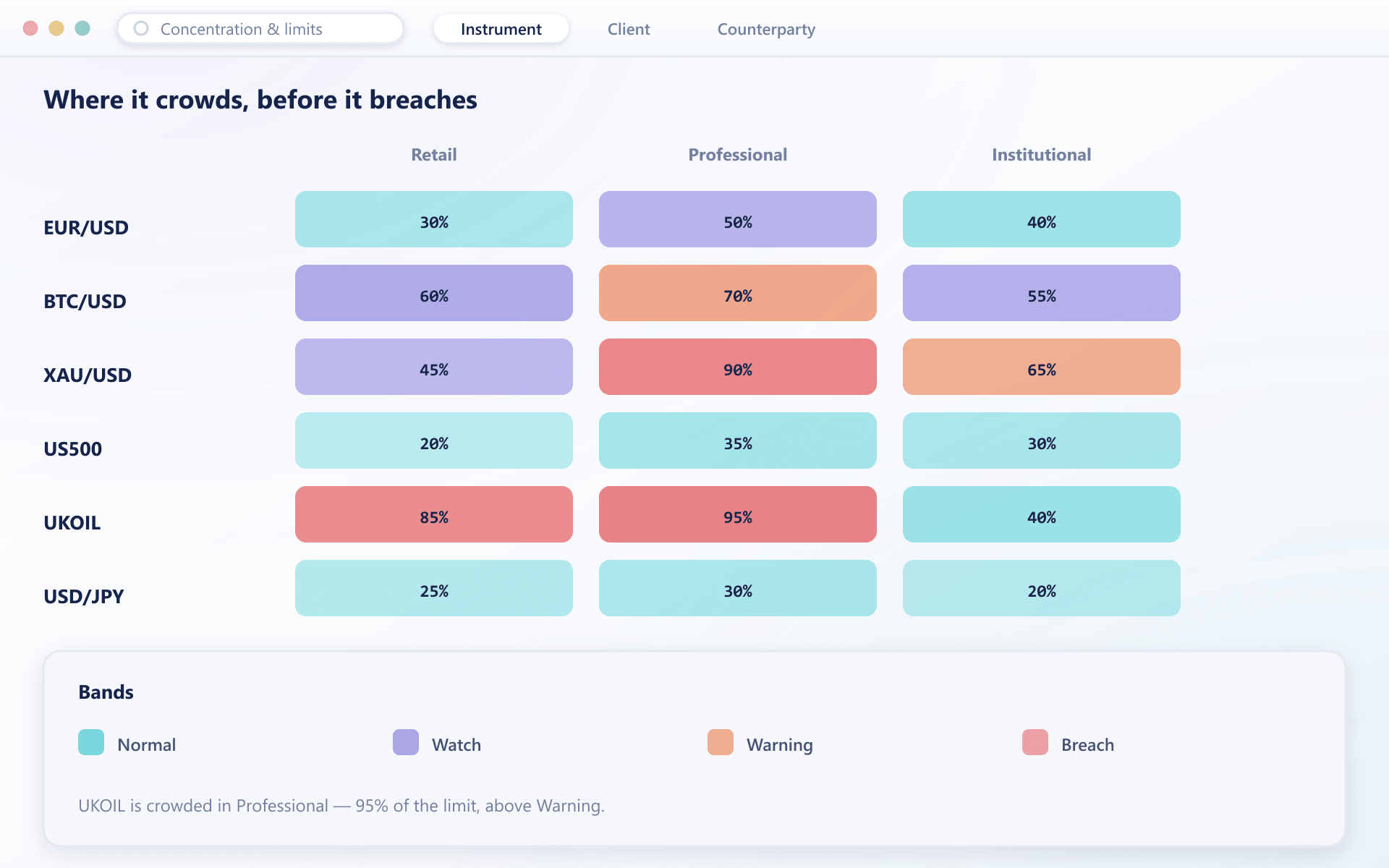
Utilisation bands
The useful conversation happens before the breach
Nothing. Utilisation is visible but unremarkable.
Surfaced on the desk. No automatic action, but somebody knows.
Alert raised, and new exposure in that dimension is flagged pre-trade.
Configured action fires and the event is recorded with its state.
Bands are illustrative — the thresholds are yours to set per limit.
Concentration that hides
Three groupings that look diversified and are not
Correlated instruments
Four positions that look diversified by symbol can be one position by exposure. Grouping by underlying rather than by ticker is what turns a comfortable spread into an uncomfortable one.
One client behind several accounts
Related accounts trading the same direction are one concentration, and treating them as separate is how a limit gets circumvented without anyone intending to.
One counterparty behind several venues
Two venues can offset to the same institution. Counterparty concentration measured by venue rather than by ultimate obligor understates the real number.
FAQ
Concentration and limits: common questions
6 short answers to what teams ask before a demo.
Instrument, asset class, client, client group and counterparty, with both absolute and percentage-of-capital forms. Most useful limits are combinations, because a single dimension rarely describes the risk you are actually worried about.
An alert, and new exposure in that dimension is flagged during pre-trade checks. The intent is that the desk knows before the breach rather than at it, because the options at 85% are considerably better than the options at 101%.
That is your choice per limit. Some should hard-block, some should require an override, and some should only warn. Making them all hard blocks results in overrides being granted routinely, which defeats the purpose.
By allowing limits on a grouping you define rather than only on individual symbols. Four positions that look diversified by ticker are frequently one position by exposure.
Yes, and they should be. Accounts that are related and trading the same direction are a single concentration, and treating them separately is the most common way a limit is circumvented unintentionally.
Always, with the state at the time, the person who overrode it and the reason they gave. An override that leaves no trace is indistinguishable from a control that was never there.
Still have a question?
A specialist will answer it directly, with your set-up in mind.
Ask a specialistWhen did you last change a limit?
Limits set at launch and never revisited describe a business that no longer exists. Reviewing them is usually the cheapest risk work available.