Surveillance
An alert channel nobody reads is worse than none at all
Not merely useless — actively worse, because it produces a documented record of every warning your desk was given and did not act on.
It creates a record you ignored
An alert that fired and was not acted on is documented evidence that you were told. A channel producing constant noise manufactures that evidence continuously.
It trains people to look away
Within about two weeks a noisy channel is muted, skimmed or filtered into a folder. After that the genuine alert arrives in a place nobody is reading.
It costs the response time it was meant to save
Finding the one that mattered among forty that did not takes longer than having no alerting at all and simply watching the exposure screen.
Keeping it quiet
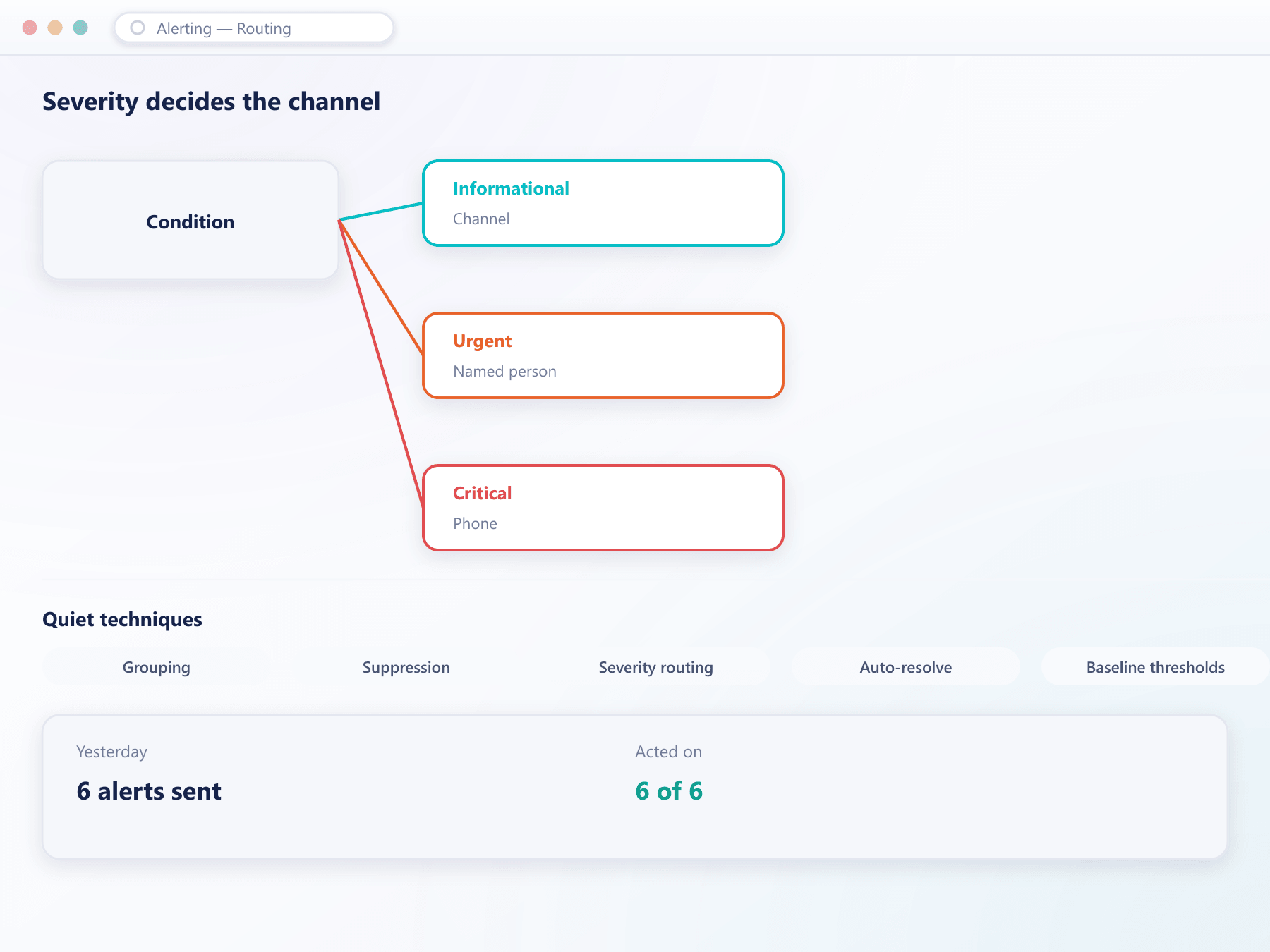
Five techniques, all aimed at fewer messages rather than more
One underlying event produces one alert, not one per affected account
A repeat of the same condition within a window updates rather than repeats
Informational to a channel, urgent to a person, critical to a phone
A condition that clears closes its own alert instead of needing dismissal
Triggering on a departure from normal rather than a fixed number
The last one matters most. A threshold set against a client’s own baseline fires far less often and means considerably more when it does.
See it live
An alert that reaches the channel someone reads
Each alert carries its severity and current status in a list the desk can act on directly, rather than a message buried among forty others.
FAQ
Alerting: common questions
6 short answers to what teams ask before a demo.
Into the channels your desk already uses, alongside the console. An alert that only exists inside a vendor's interface is one your team has to remember to go and look at.
Grouping, suppression and severity routing, plus thresholds based on a departure from baseline rather than fixed numbers. The design goal is a channel quiet enough that people still read it.
One alert, with the affected accounts attached. Producing one notification per account is how a single market move generates forty messages and the desk stops reading any of them.
Yes, and they should. Informational alerts belong in a channel, urgent ones with a named person, and critical ones on a phone. Sending everything to the same place means everything gets the same attention.
When the underlying condition clears, yes. Requiring someone to dismiss alerts that resolved on their own produces a backlog which then hides the ones that did not.
Yes, and tuning is not optional. Thresholds that fit one book generate noise on another, and the first month of any risk deployment is largely spent getting them right for your flow.
Still have a question?
A specialist will answer it directly, with your set-up in mind.
Ask a specialistHow many alerts did your desk get yesterday?
And how many were acted on? The ratio between those two numbers is the whole state of your alerting.