Reporting
The question is never whether it happened
It is who decided, what they were looking at, and why it seemed reasonable at the time. Recollection is not evidence, and months later it is not even reliable.
See it live
Every change, with who and when attached
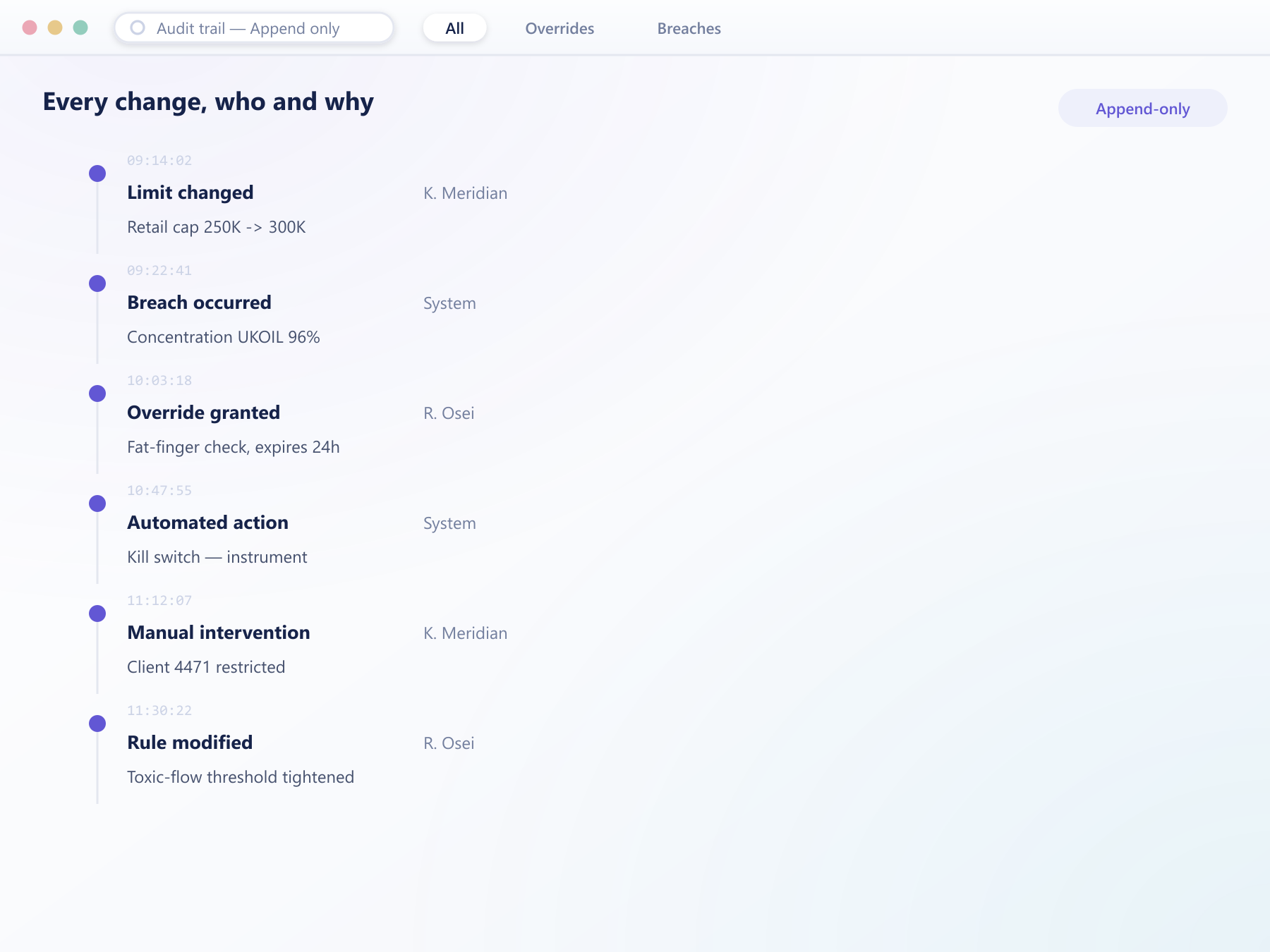
Limit changes and overrides sit in a searchable list, each entry carrying the author and the reason, the same way a key’s usage history would.
What is recorded
Six event types, each with the context around it
Old value, new value, author, reason, effective time
Which limit, by how much, and the positions responsible
Who authorised it, the reason given, and any expiry set
The rule that fired, its threshold, and what it did
The dealer, the action, and the screen state at the time
The previous version, so history stays interpretable
Three properties
Without all three it is a log rather than a trail
Append-only
Entries are added, never edited or removed. A trail that can be modified answers no question that anyone would think to ask of it.
State captured, not just the action
Knowing a limit was overridden is half the story. Knowing what the exposure and utilisation were at that moment is what makes the decision assessable rather than merely visible.
Searchable by the question you have
By client, instrument, person, rule or time window. A trail that can only be exported and grepped is technically complete and practically unusable.
FAQ
Audit trail: common questions
6 short answers to what teams ask before a demo.
For your retention period — the default is 7 yrs, and it is configurable to whatever your jurisdiction requires. Entries are never edited or removed within that window.
Limit changes, breaches, overrides, automated actions, manual interventions and rule modifications. Each carries who, when, why and — critically — the exposure and utilisation state at that moment.
Because a decision should be judged against what was visible at the time rather than what became known afterwards. Without the state, every past decision is assessed with hindsight, which is neither fair nor useful.
No. The trail is append-only. A correction is a new entry referencing the original, because a record that can be altered cannot answer the question it exists for.
By client, instrument, person, rule or time window. A trail that can only be exported wholesale is complete on paper and unusable when somebody actually needs an answer.
Yes, and it covers different ground. Platform logs record what happened to orders. This records what the risk function decided, which is what an examiner asks about and what platform logs do not contain.
Still have a question?
A specialist will answer it directly, with your set-up in mind.
Ask a specialistCould you explain a limit override from last March?
Who granted it, what the exposure was at the time, and what reason they gave. That is the standard, and most desks cannot meet it.