Controls & Compliance
Two systems should describe the same events
When the provider statement and the internal ledger disagree, month end stops being a reconciliation and becomes an investigation. The fix is recording enough at the time that the difference explains itself.
See it live
One ledger, reported four ways
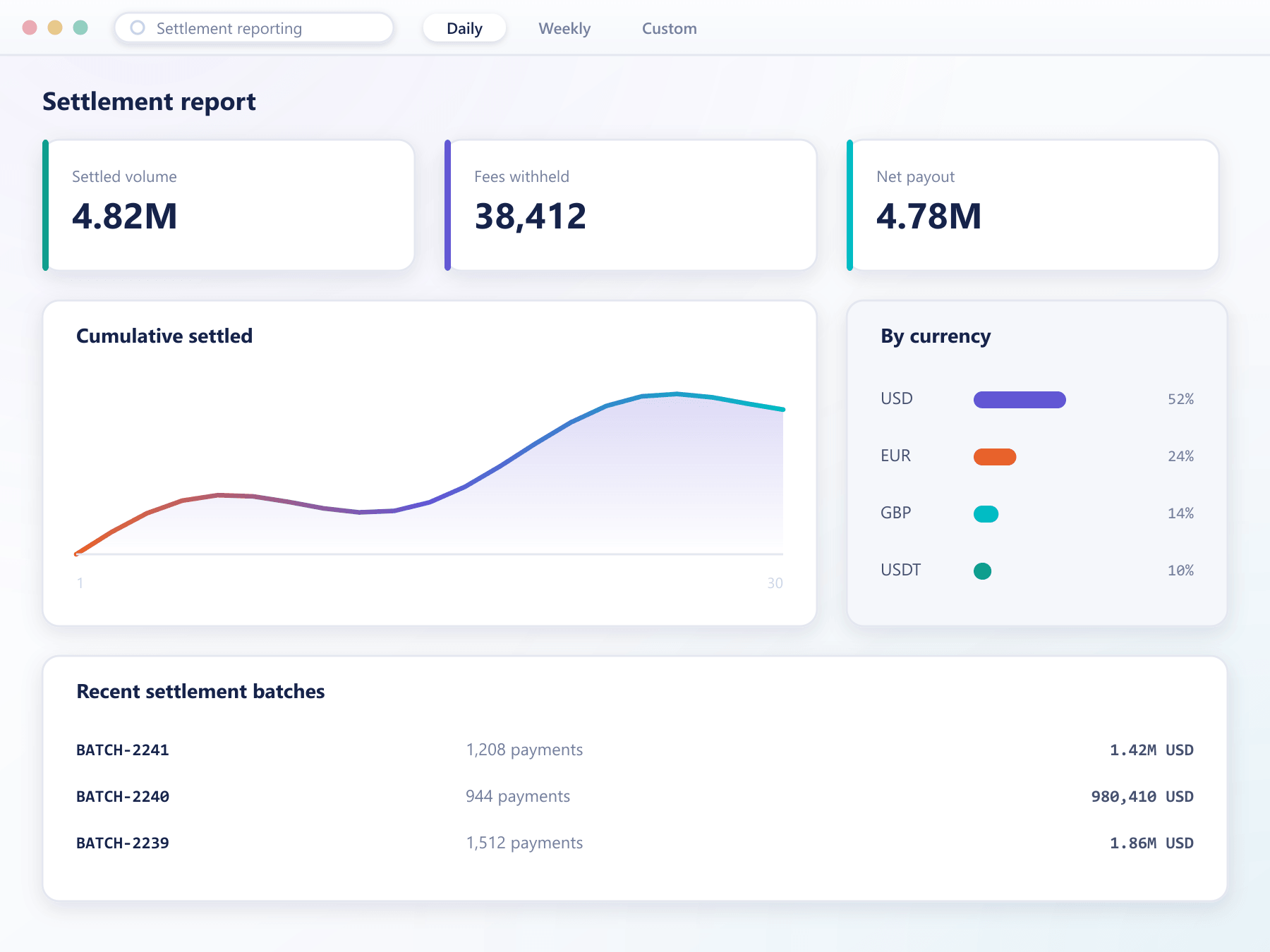
Per-provider settlement, fee attribution and currency breakdowns all come out of the same entries your finance team already reconciles against.
What comes out
Four reports, all derived from the same ledger
Per-provider settlement
What each provider says they sent you, against what the ledger says arrived, with differences itemised rather than presented as a single unexplained variance.
Fee attribution
Every fee attached to the movement that caused it, so the cost of a funding method is a number you can look up rather than one you estimate at the end of a quarter.
Currency and method breakdown
Volume and cost split by currency, method and client segment. This is what tells you a method is unprofitable in one market while working well in another.
Exports built to reconcile
Structured so your accounting system can consume them directly. An export that has to be re-keyed is a report about the data rather than the data.
Why the numbers drift
Three causes, and none of them is anybody making a mistake
Timing
A movement recorded on one side before midnight and the other side after it. Cut-off is recorded explicitly so the difference resolves rather than persisting as a mystery.
Fees deducted at source
A provider that nets its fee before sending leaves the gross and net figures disagreeing. Both are recorded, so neither has to be inferred.
Partial settlement
A batch that settled in two parts appears as one figure on one side and two on the other. The link between them is kept rather than rebuilt each month.
FAQ
Settlement reporting: common questions
6 short answers to what teams ask before a demo.
They are two halves of the same job. BrokerOS is where your operations team performs the reconciliation and resolves what does not match. PayVault produces the settlement records they reconcile against, derived from the payment ledger itself.
Almost always timing, fees deducted at source, or a batch that settled in parts. All three are recorded explicitly rather than being left to inference, which turns a monthly investigation into a matching exercise.
Yes. Every fee is attached to the movement that caused it, so the real cost of a funding method is a figure you look up rather than one you estimate from an aggregate at the end of a period.
Yes, and the exports are structured for consumption rather than for reading. An export that has to be re-keyed is a report about your data, not your data.
For your full retention period. Settlement records are derived from ledger entries rather than stored as generated snapshots, so a report run today for last year gives the same answer it would have then.
Yes, delivered on the cadence your finance team works to. The useful ones run without anyone remembering to trigger them, because the ones that require remembering are the ones that stop happening.
Still have a question?
A specialist will answer it directly, with your set-up in mind.
Ask a specialistHow long does your month end take?
If the honest answer includes the word investigation, the problem is upstream of the reporting rather than in it.