Payments
A deposit either lands, or it explains itself
The expensive failure in funding is not the decline. It is the decline nobody can explain — to the client, or to the support agent they contact ten minutes later.
The client committed. Nothing has moved yet.
The provider or network has it and is working.
Funds are on the client balance and tradeable.
It stopped, with a reason attached that support can read.
See it live
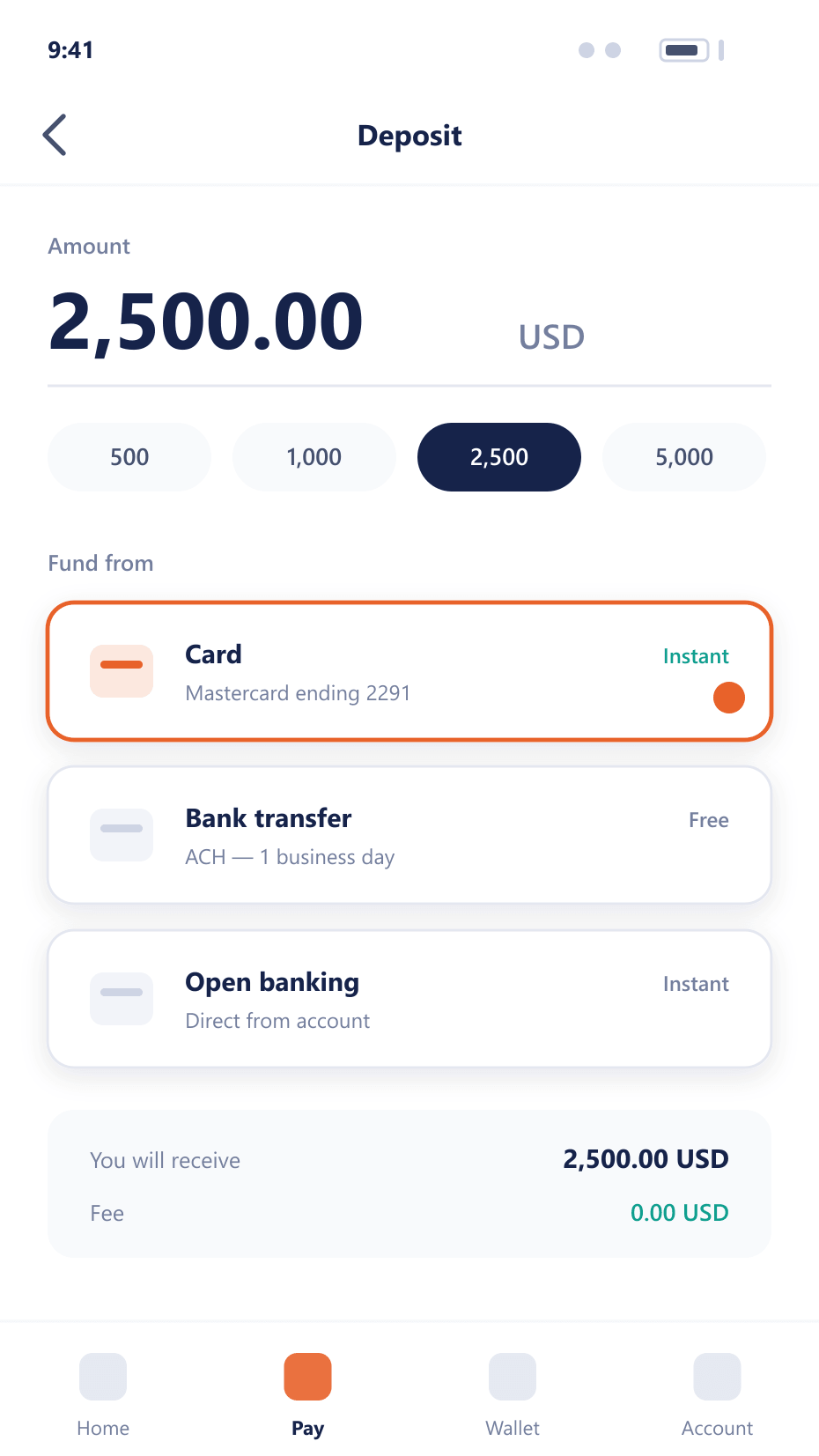
The screen a client actually sees
Amount, method and confirmation, on the device most funding attempts actually happen on. Everything else on this page is what sits behind that one screen.
The cases that cost money
The situations that decide whether funding becomes a problem
Duplicates caught, not credited twice
A client who presses the button twice, or a provider that sends the same notification again, produces one deposit. Every inbound event is matched against what has already been recorded.
The sending address is recorded
Incoming digital asset transfers carry their originating address into the deposit record. Without it, a refund or a source-of-funds question turns into a manual chain lookup weeks after the fact.
Underpayments and overpayments
When the amount received does not match the amount expected, the difference is surfaced as its own decision rather than silently credited or silently rejected.
Late arrivals still land
A payment that completes after the client has closed the browser still credits, and the client is told. Abandoning the session should not abandon the money.
Limits per method and segment
Minimums, maximums and per-period caps are set per funding method and per client group, and are enforced when the request is made rather than reported afterwards.
Failure reasons
What your support team sees instead of “payment failed”
The provider refused it. The client should try another method.
Above the configured cap for this method or period.
Received amount differs from the expected amount.
The client did not complete within the window.
Already recorded. No second charge was made.
Reason codes are stable, so your own tooling can act on them rather than parsing text.
FAQ
Deposits: common questions
6 short answers to what teams ask before a demo.
As soon as the funding method's own conditions are met — immediately for most instant methods, and at the confirmation threshold you configure for each network when the deposit is in digital assets. Crediting is automatic; it does not wait for anyone to press a button.
Every inbound request and provider notification carries an identifier that is matched against what has already been recorded. A repeated submission produces the same deposit, not a second one, which matters because duplicate charges cost far more in support and goodwill than the deposit was worth.
It becomes an explicit decision rather than a silent outcome. The mismatch is surfaced with both figures shown, and your policy decides whether it is credited as received, held for review, or returned.
Yes. Every failure carries a stable reason code and a plain description, visible to your team without contacting us. Generic failure messages are the single largest cause of avoidable support load in payments.
Yes. Minimums, maximums and per-period caps are properties of the funding method combined with the client group, so a professional segment and a retail segment can fund on genuinely different terms on the same platform.
The deposit still completes if the provider completes it. The credit lands on the account and the client is notified, rather than the money arriving with nobody having told them.
Still have a question?
A specialist will answer it directly, with your set-up in mind.
Ask a specialistBring your deposit completion rate
It is the number that tells us most about a payment setup, and the one most desks have never been shown.