Payments
More funding is lost on this screen than anywhere else
The client has already decided to give you money. Everything that happens after that point is yours to lose, and most payment screens lose a meaningful share of it.
See it live
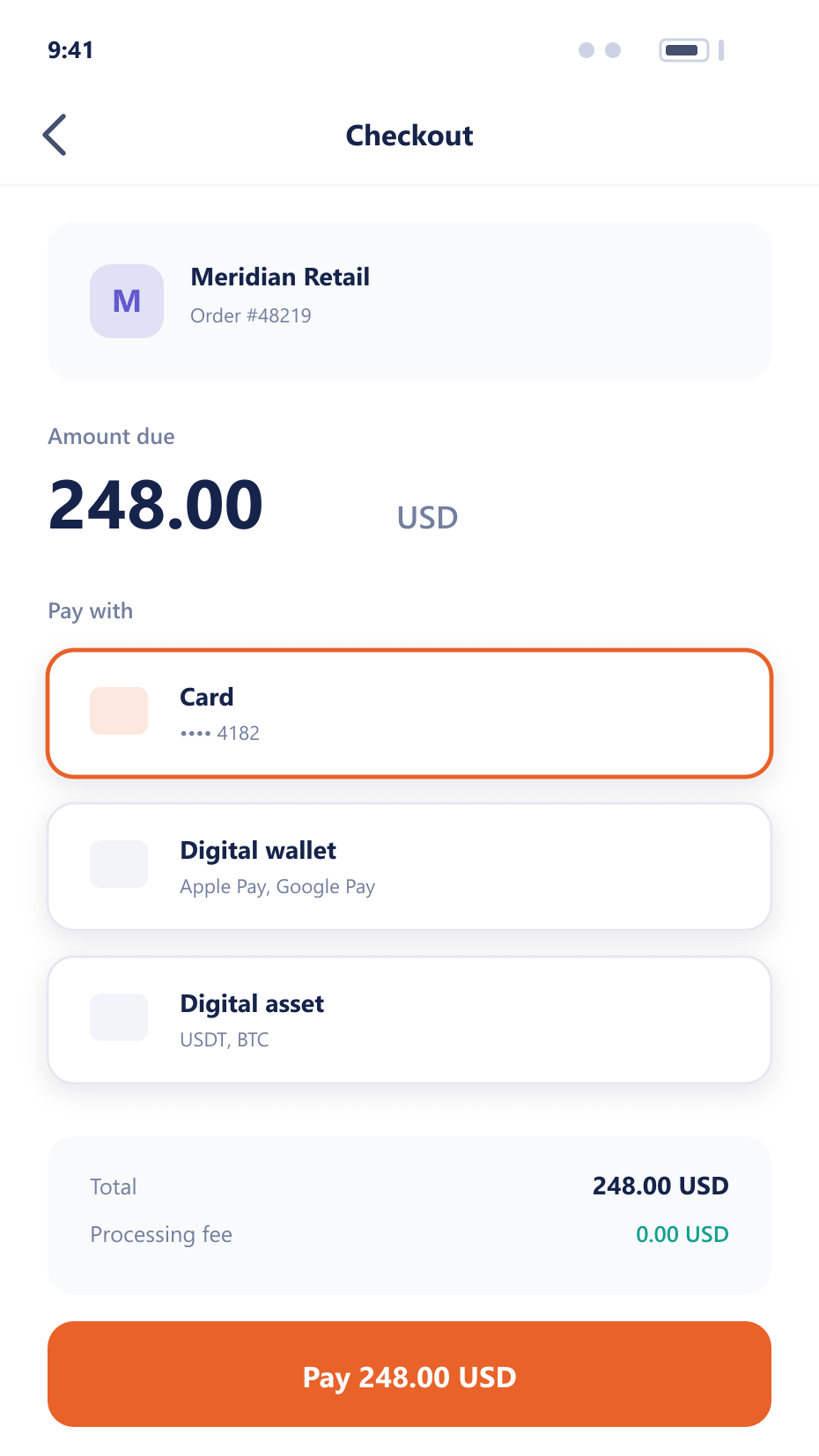
Hosted or embedded, the same clean funding screen
The client has already decided to give you money. The method picker, the amount field and the return path are all designed around not losing them here.
Two ways to run it
Both carry your brand. They differ in where the client thinks they are.
We host the page, you brand it
The client is redirected to a page carrying your domain, logo and colour system. The fastest route to live, and the one that keeps sensitive instrument data furthest from your own systems.
Your domain and branding
No card data touches your servers
Fastest to launch
It lives inside your client area
The funding flow renders inside your own interface, with the sensitive fields isolated. The client never appears to leave, which is what most established brands want.
No visible redirect
Sensitive fields isolated
Full control of surrounding layout
Where sessions die
Four places a funding attempt stops, and what each one needs
Too many methods, badly ordered
A client shown twelve options picks none of them. Methods are ordered by what actually works for that client's country and currency, with the rest behind a single control.
Errors that say nothing
A message that only says something went wrong ends the session. A specific message with a specific next action keeps most clients in the flow long enough to try again.
The return journey
Coming back from a bank app or a 3-D Secure step is where sessions die. The return path is treated as a first-class case rather than an afterthought.
Built for the phone first
Most funding attempts happen on a phone, often on a poor connection. The flow is designed for that and then allowed to look good on a desktop.
FAQ
Checkout: common questions
6 short answers to what teams ask before a demo.
Hosted is faster to launch and keeps sensitive instrument data furthest from your systems. Embedded avoids a visible redirect, which established brands usually prefer. Both carry your branding, and moving between them later is a configuration change rather than a rebuild.
No. Sensitive fields are isolated in both modes, so the data never reaches your infrastructure. That is deliberate: the smaller the surface holding instrument data, the smaller the obligation that comes with it.
Yes, by client group, country and currency. Ordering matters as much as availability — a client presented with a long undifferentiated list tends to abandon rather than choose.
Yes, where the method supports it. The stored reference lives with the provider rather than with you, and the client can remove it themselves without contacting support.
The attempt is recorded with the stage it reached, so you can see where sessions are actually being lost rather than only that they were. If the payment later completes anyway, it still credits and the client is told.
Logo, colour system, typography and copy. The structure of the flow itself stays consistent, because the sequence is what conversion depends on and it is the part that has been measured.
Still have a question?
A specialist will answer it directly, with your set-up in mind.
Ask a specialistWhere do your funding sessions stop?
If you cannot answer that today, that is the first thing worth changing — before any of the rest of it.