Digital Assets
The way out matters as much as the way in
Plenty of platforms make it easy to convert into digital assets and quietly difficult to convert back. Clients notice, and they tell each other.
Fiat in, digital assets out
A client funds by card or bank transfer and receives a digital asset balance. The conversion is part of the funding operation rather than something they have to do afterwards.
Digital assets in, fiat out
A client converts back and withdraws to a bank instrument. The path back is the one people forget to build, and the one that decides whether they trust the first direction.
See it live
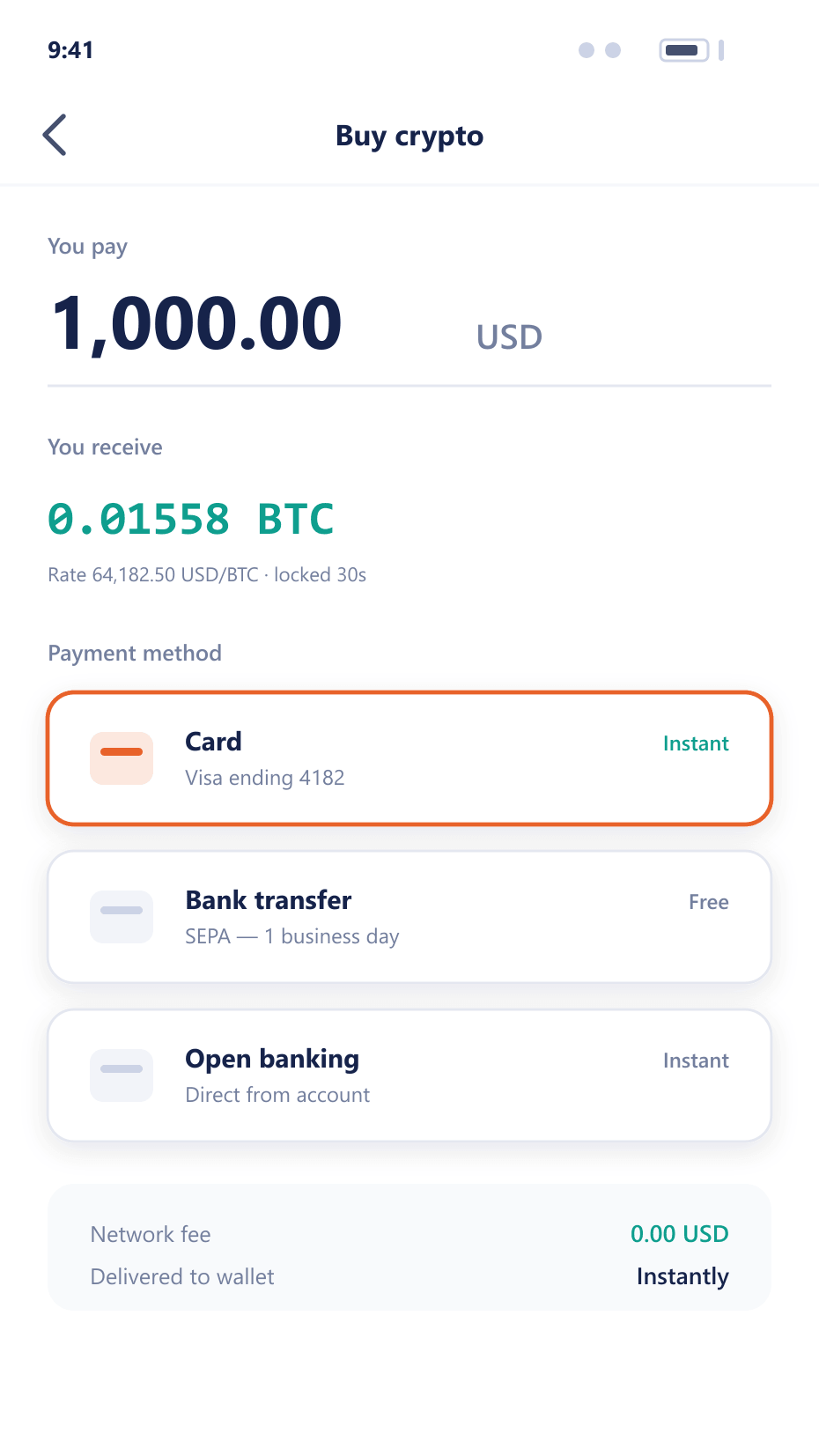
The rate, quoted before the client commits
Both directions start the same way for the client: a number, an expiry, and a method to fund or receive against — the screen most of them will actually see.
One conversion, four steps
The client sees a number, then that number is what happens
- 1
Quote
A rate is issued with an expiry, so the client sees the number before they commit rather than after.
- 2
Hold
For the life of the quote, that rate is what applies. If it expires, the client is re-quoted instead of surprised.
- 3
Execute
Funds move and the conversion happens as one operation, not as a transfer followed by a separate trade.
- 4
Record
One ledger entry describes the whole thing: what went in, what came out, the rate and the fee.
FAQ
On and off ramp: common questions
6 short answers to what teams ask before a demo.
Yes. A quote is issued with an expiry and that rate is what applies for its lifetime. If the quote expires before the client acts, they are re-quoted rather than filled at a number they never agreed to.
The held quote stands, which means the exposure for that window sits with whoever your policy assigns it to. The hold duration is configurable precisely because it is a risk decision rather than a technical one.
One, from the client's point of view and on the ledger. A single entry records what went in, what came out, the rate applied and the fee — which is what makes it reconcilable later.
Yes. Per-transaction and per-period limits are set by client group, so a professional segment and a retail segment can convert on genuinely different terms without separate infrastructure.
Both, and the off ramp deserves equal attention. Building a smooth way in and a difficult way out is the fastest way to lose the clients you just acquired.
You do. Markup on the conversion rate is configured per asset and per client group, and it is reported separately from the underlying rate so your own margin is visible rather than buried.
Still have a question?
A specialist will answer it directly, with your set-up in mind.
Ask a specialistWork through the quote window with us
How long you hold a rate is a risk decision. We will walk through what different windows cost against your own volumes.