Aggregation
What actually flows through the hub
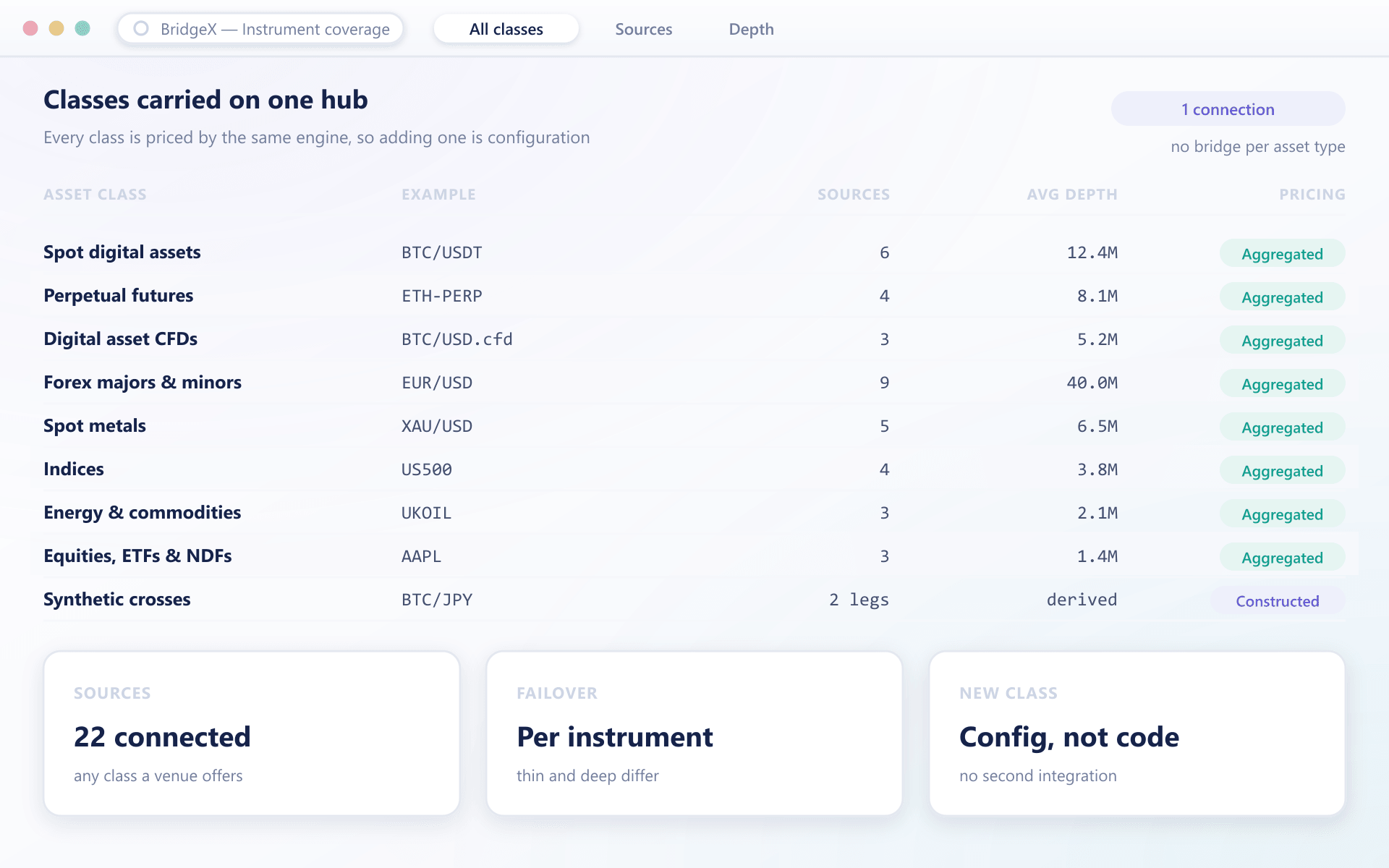
A liquidity hub is only useful for the instruments it can price. BridgeX aggregates and distributes across the classes below, and a broker can carry all of them on one connection rather than running a bridge per asset type.
Classes carried
One hub, not one per asset type
Each class is priced, aggregated and routed through the same engine, so adding a new one is configuration rather than another integration.
Spot digital assets
Direct venue books consolidated into one depth ladder, with per-venue weighting and the option to exclude a venue from pricing without disconnecting it.
Perpetual futures
Perpetual contracts carried alongside spot, including funding rate handling, so a book can hedge across both without a separate connection.
Digital asset CFDs
Contracts for difference on digital assets, priced from the same aggregated book that feeds spot, which keeps the two consistent.
Forex and metals
Major, minor and exotic pairs plus spot metals from bank and non-bank sources, aggregated with the same depth and failover rules.
Indices, energy and commodities
Index, energy and commodity CFDs carried on the same hub, so a multi-asset broker is not running three vendors to quote one client.
Equities, ETFs and forwards
Single-name equities, exchange traded funds and non-deliverable forwards, each with their own contract specifications and session handling.
How a class is added
From venue to quotable instrument
Connect the source
A venue or provider is connected once and can supply any class it offers, rather than being tied to a single asset type.
Define the instrument
Symbol, contract size, tick and session rules are set per instrument, including a taker-side name that differs from the maker-side one.
Set the pricing rules
Depth, markup and failover order are configured for that instrument, so a thin market and a deep one do not share a policy.
Expose it to takers
The instrument becomes available to the taker groups you enable, over whichever protocol each of them consumes.
Asset class questions
What the hub can and cannot carry
4 short answers to what teams ask before a demo.
No, and that is the point. One connection carries every class you enable. Running a separate vendor per asset type is how brokers end up with inconsistent pricing between their own products.
Yes, where your account structure allows it. Both are priced through the same engine, so a net position across them is visible rather than split across two systems.
Pricing falls to the next source in that instrument's failover order. If no source remains, the instrument stops quoting rather than publishing a stale price.
Yes, as a synthetic. A cross is constructed from two or more legs the hub does price, and it behaves like any other instrument to a taker.
Still have a question?
A specialist will answer it directly, with your set-up in mind.
Ask a specialistBring the instrument list you need to quote
Send us what your clients trade and we will show which sources would price each of them and where a synthetic is the better answer.