Risk & Accounts
A limit that is only reported is not a limit
Exposure caps in BridgeX are consulted before flow is retained. An order that would breach one is routed out instead, which means the number your risk committee agreed is the number the book actually respects.
Limits that must all hold
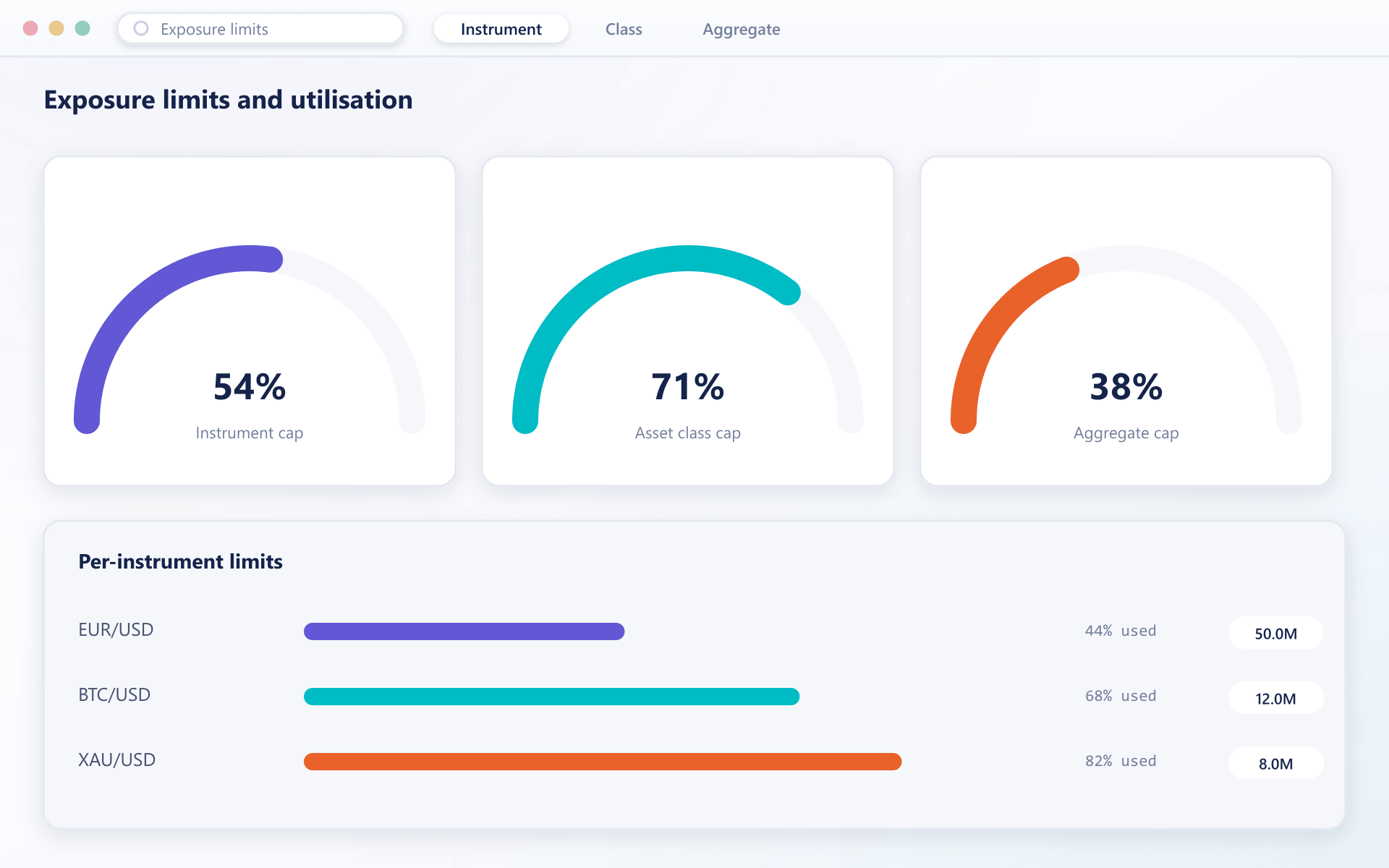
Live utilisationIllustrative. Retained flow has to satisfy every applicable cap at once.
See it live
Every cap, and how close it is to binding
Gauges for instrument, asset class and aggregate exposure alongside per-group limit bars, so headroom is visible before it becomes a problem.
The levels a limit can sit at
They compose: an order must satisfy every applicable limit, not just the narrowest one
Per instrument
The most granular cap, and the one that matters most in thin instruments where a modest position is a large share of the market.
Per asset class
Catches correlated accumulation that per-instrument limits miss, where many small positions add up to one large directional bet.
Per counterparty
Caps how much exposure any single relationship can generate, which is a credit control as much as a market one.
Aggregate book
A ceiling on total retained exposure across everything, so the sum of individually reasonable positions stays reasonable.
Live utilisation
Each limit shows current usage and headroom, with the positions contributing most identified rather than left to be worked out.
How a limit changes an outcome
The check happens where retention is decided, which is the only place it can prevent anything
- Check
Every applicable limit consulted
Before flow is retained, the resulting exposure is tested against the instrument, asset class, counterparty and aggregate caps together.
- Divert
Breaching flow is routed out
Rather than refusing the client, an order that would breach a cap is executed externally. The client is served; the risk is not retained.
- Alert
Approaching, not just breached
Utilisation crossing a warning level raises an alert while there is still headroom, so limits are managed rather than merely hit.
- Review
Utilisation history informs the next limit
Reporting shows how close each limit came over time, which is what tells you whether a cap is doing work or just decoration.
What enforced limits change
The point is not to prevent trading. It is to make the risk a choice.
No accidental concentration
Asset-class caps catch what per-instrument limits let through.
Clients still served
Breaching flow is routed out rather than refused, so the limit is invisible to the client.
Credit control included
Per-counterparty caps limit what one relationship can do to your book.
Limits you can tune
Utilisation history shows which caps are binding and which are theatre.
FAQ
Exposure limits: common questions
5 short answers to what teams ask before a demo.
It is routed out to the market instead of being retained. The client is filled normally — the limit changes what happens to the risk, not whether the trade occurs.
They compose. Retained flow must satisfy the instrument, asset class, counterparty and aggregate caps simultaneously, so the effective constraint is whichever binds first.
Because correlated positions accumulate. Several instruments each well within their own cap can together form a large directional position that only an asset-class limit will catch.
Yes. Utilisation crossing a configured warning level raises an alert while headroom remains, which turns limit management into a routine activity rather than an incident.
Utilisation history shows how close each limit came over any period. A cap that is never approached is not controlling anything; one that binds constantly is probably costing you business.
Still have a question?
A specialist will answer it directly, with your set-up in mind.
Ask a specialistSet your limit structure with us
Bring your risk mandate and we will build the limit hierarchy on a live environment during the call.