Compliance
Where a client is decides what they can do
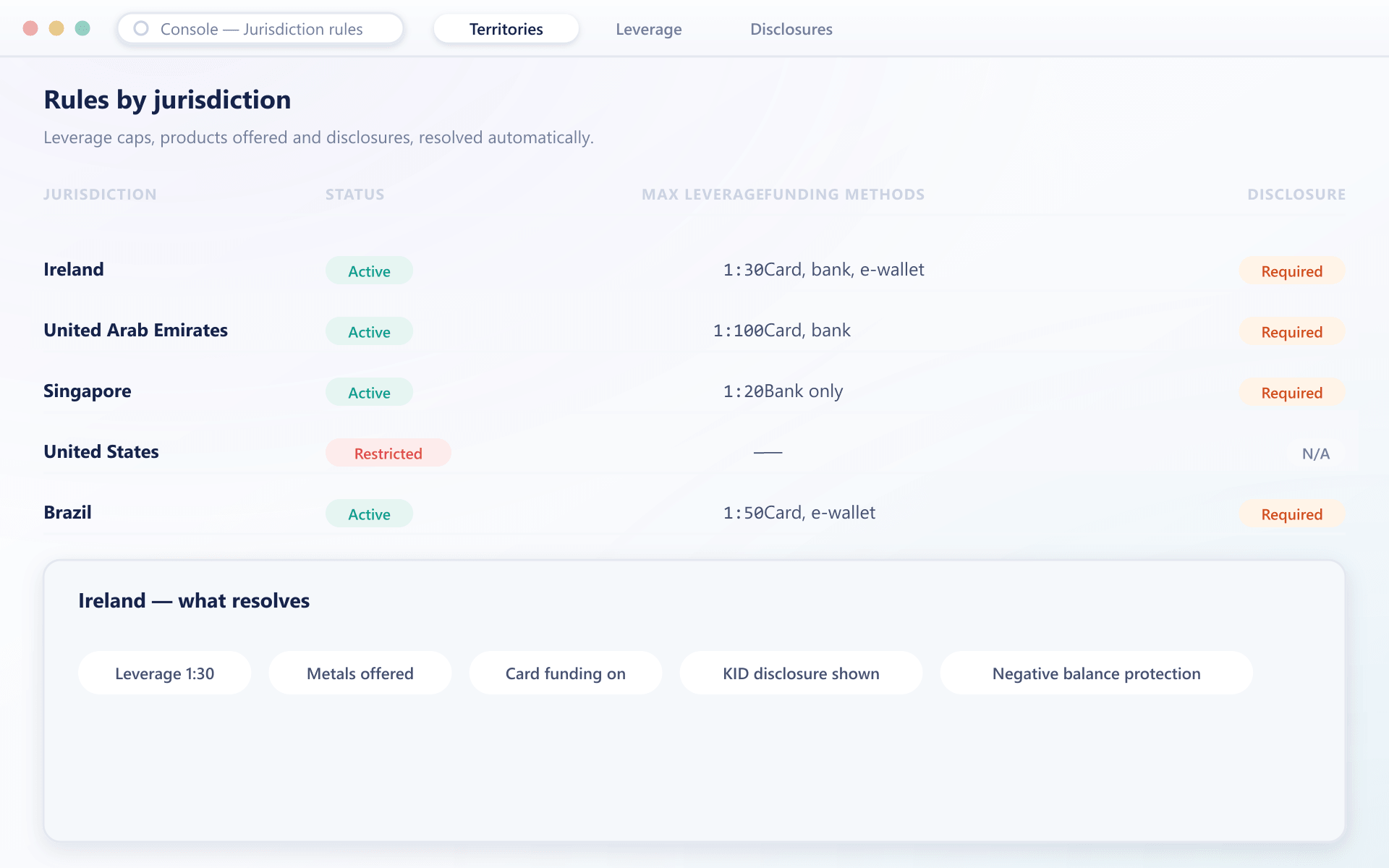
Restricted territories, leverage caps, which products are offered, which funding methods appear and which disclosures must be shown — all resolved from jurisdiction and enforced by the platform.
Market A
1:30FX, indicesCards, transferOpenMarket B
1:200Full rangeTransfer, digitalOpenMarket C
———RestrictedIllustrative configuration. Each row is enforced by the platform, not by a policy note.
What a jurisdiction rule can control
The point is that none of this depends on someone remembering
Restricted territories
Registration from a restricted territory is refused at the point of signup rather than discovered during a later review.
territoryLeverage caps
Where a regulator caps leverage, the cap is applied to the client group automatically rather than being a documented intention.
leverageProduct availability
Instruments and account types a jurisdiction does not permit simply do not appear for clients in it.
productsFunding eligibility
Which payment methods are offered follows the jurisdiction as well as the client group, since availability differs by country.
fundingRequired disclosures
Risk warnings and disclosures specific to a jurisdiction are shown at the points that jurisdiction requires, and acknowledgement is recorded.
disclosureSee it live
One rule table, every market
Leverage caps, product availability and funding eligibility sit in a single configuration your team edits per jurisdiction, not per client.
From signup to enforced conditions
The determination happens early and the consequences follow automatically
- Determine
Jurisdiction established
Country of residence is captured at signup and confirmed during verification, and it drives everything downstream from that point.
- Restrict
Refused where required
A restricted territory is refused at registration with the appropriate message, rather than allowing an account that must later be closed.
- Configure
Group assignment follows
The client is placed in the group carrying that jurisdiction's leverage, products and funding methods, so conditions are structural.
- Disclose
Shown and recorded
Required disclosures appear at the required points and the client's acknowledgement is written to their record with a timestamp.
Why structural enforcement matters
A rule that depends on a person remembering it is a rule you will breach eventually.
No accidental breaches
A client cannot access a product their jurisdiction forbids, because it is not offered to them.
Multi-entity operation
One deployment can serve several regulated entities with genuinely different rules.
Evidenced disclosures
Recorded acknowledgements answer the question a regulator asks first.
Faster market entry
Adding a jurisdiction is configuration, so a new market is a commercial decision.
FAQ
Jurisdiction rules: common questions
5 short answers to what teams ask before a demo.
Country of residence captured at signup and confirmed during verification. Where the two disagree, the case is queued for review rather than resolved silently.
Registration is refused at that point with the appropriate message. Allowing the account and closing it later creates a client relationship you then have to unwind.
Yes. Jurisdiction determines the client group, and the group carries the leverage cap, so a regulatory limit is enforced structurally rather than by policy.
Yes. Required disclosures are shown at the points a jurisdiction requires and the client's acknowledgement is written to their record with a timestamp.
Yes. Different jurisdictions map to different client groups with their own products, leverage, funding methods and disclosures, all in one platform.
Still have a question?
A specialist will answer it directly, with your set-up in mind.
Ask a specialistMap your jurisdictions with us
Bring the markets you operate in and we will configure the rules for each during the call.