Accounts
One account that holds every currency your clients trade in
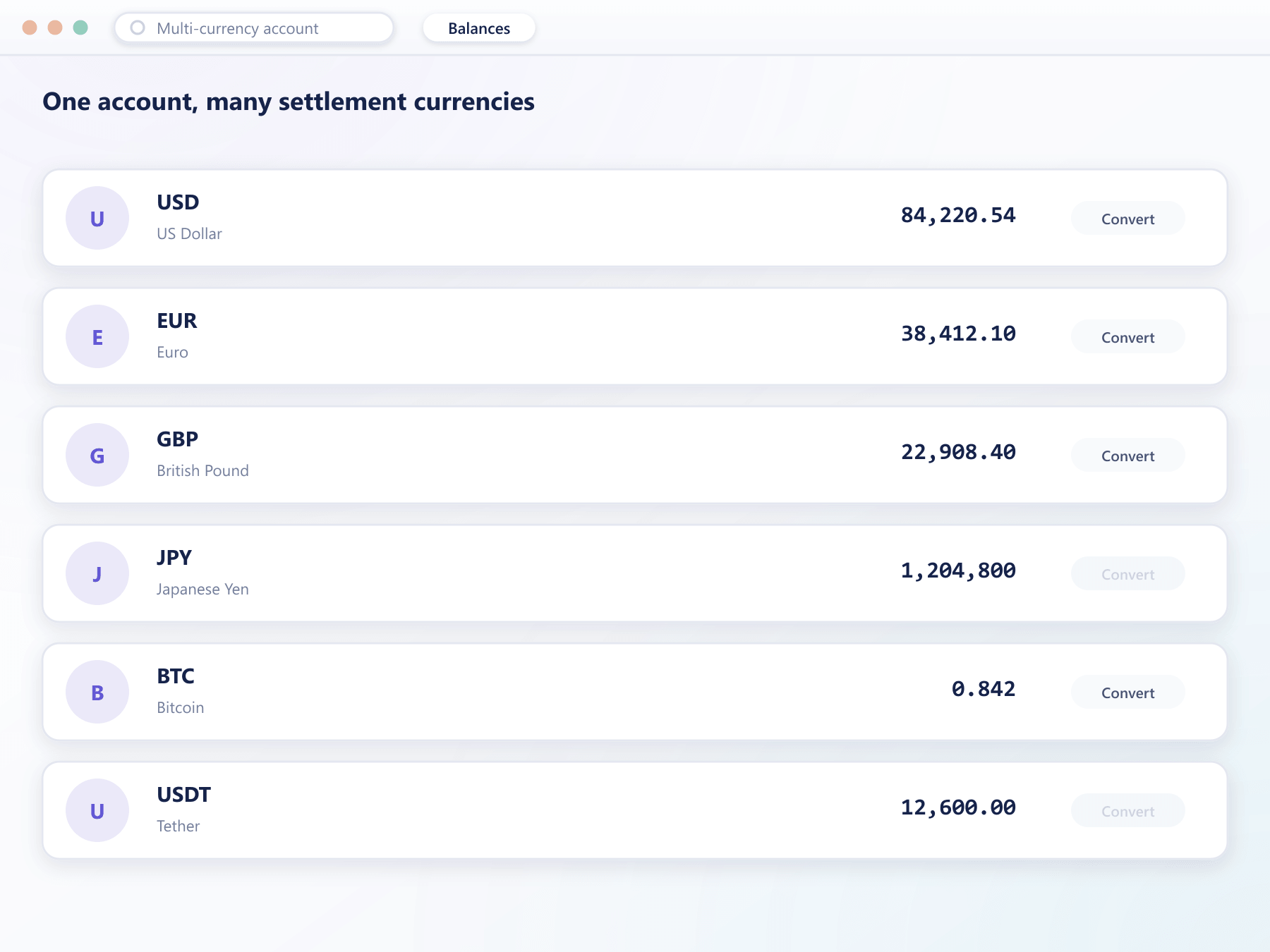
A TradeX account carries as many currency balances as you enable. A client funding in euros and trading a dollar-quoted instrument does not need a second account, and does not pay a conversion to get there.
One account
6 balances- USD
Fiat
Base settlement for most CFD instruments
- EUR
Fiat
Native settlement for euro-quoted symbols
- GBP
Fiat
Held without conversion until it is traded
- USDT
Stablecoin
Bridges fiat and digital asset books
- BTC
Digital
Spot holding, usable as margin collateral
- ETH
Digital
Spot holding, usable as margin collateral
Key features
Trade the world from a single account
The account is a container for balances, not a wrapper around one currency. Everything else follows from that.
See it configuredMany balances, one account
Each account holds a balance per enabled currency. Classic fiat, stablecoins and digital assets sit in the same list with the same operations available on each.
Native-currency trading
An instrument quoted in a currency the client already holds settles directly against that balance, so no conversion happens and no conversion cost is charged.
Automatic allocation
When a trade is placed, the platform resolves which balance it draws on from the instrument settlement currency and the balances available.
Spot and margin together
Spot holdings and margin positions share the account. Moving value between them is an internal transfer, not a withdrawal and a redeposit.
How it works
What happens when a euro balance meets a dollar-quoted instrument
- 01
The client funds in euros
The deposit credits the EUR balance. Nothing is converted, and the balance stays exactly as it arrived.
- 02
They open a dollar-quoted position
The ticket shows which balances are eligible for that instrument and what the trade will draw on before it is placed.
- 03
Margin is taken from eligible collateral
Because EUR is eligible collateral at the haircut you set, the position opens without touching the euro holding itself.
- 04
The result settles in the instrument currency
Profit or loss lands in USD as its own balance. The client now holds both, and neither was forced through a conversion.
Opportunities of usage
Why the account model matters
Lower cost to trade
Conversions that never happen cannot be charged for.
Less operational work
One account per client instead of one per currency.
Natural hedging
Holding several currencies dilutes exposure to any one.
Room to list more
A new settlement currency is configuration, not migration.
FAQ
Multi-currency accounts: common questions
6 short answers to what teams ask before a demo.
It is a single account that holds a separate balance for every currency you enable, rather than one balance in one base currency. The client trades, funds and withdraws in any of them without the platform creating additional accounts behind the scenes.
Any currency you enable in the broker console — major and minor fiat, stablecoins, established digital assets and long-tail tokens. The list is set per client group, so different tiers can be offered different currencies.
Not if the client already holds the settlement currency. The trade settles directly against that balance. A conversion only happens where the balance is insufficient and you have enabled automatic conversion for that group.
Yes. Spot holdings and margin positions live in the same account, and moving value between them is an internal transfer rather than a withdrawal and a new deposit.
The client picks a display currency and the platform converts every balance into it for the headline figure only. The underlying balances are never converted or rebased.
The platform does not charge for holding a balance. Any account-level fee is something you configure yourself, and conversion charges only apply where a conversion actually takes place.
Still have a question?
A specialist will answer it directly, with your set-up in mind.
Ask a specialistSee the account model with your currency list
Tell us which currencies you plan to support and we will configure them in a live environment before the call.