For FX & CFD Brokers
One contract definition, read by everything
Contract size, tick value, quote precision, quantity step, margin currency and trading hours live on the instrument. The ticket, the chart, the risk engine, statements and reporting all read the same definition.
EUR / USD — specification
Published- contract_size
- 100 000
- tick_value
- 10.00
- quote_precision
- 5
- quantity_step
- 0.01
- min_order_size
- 0.01
- max_order_size
- 50.00
- margin_currency
- USD
- financing_currency
- USD
Illustrative values. Every field is set per instrument when it is listed.
What a specification covers
The fields that decide how an instrument behaves everywhere it appears
Size and tick value
Contract size and the monetary value of a minimum price movement, which together determine what a position is actually worth.
Precision and steps
Quote precision and quantity step, so a ticket cannot accept a price or size the engine would round away.
Margin and financing currency
Which balance margin is taken from and which balance financing charges land on, set independently where they differ.
Trading calendar
Session hours, weekly breaks, holidays and partial sessions, applied automatically to order acceptance.
Published to clients
The specification is visible in the client area and on the ticket, which removes an entire category of support question.
See it live
Tiered rules a client group inherits, not re-enters
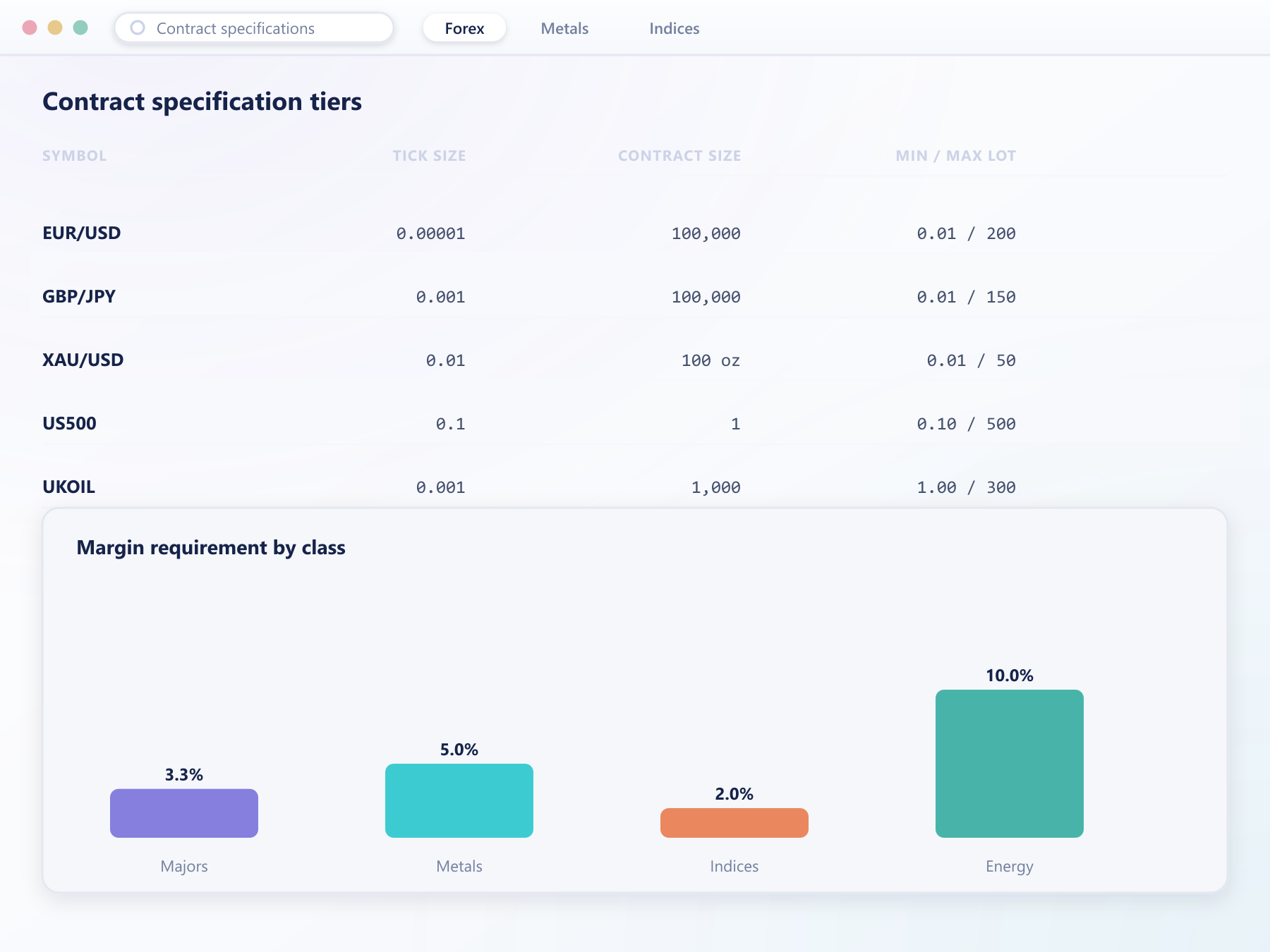
Size limits, precision and the risk bands attached to a specification show up as a tiered rule table, the same shape your operations team edits in the console.
One definition, many consumers
Where the specification is read, and why that consistency matters
Instrument definition
The ticket enforces it
Precision, step and size limits shape what the ticket will accept, so an order cannot be constructed that the engine would reject on those grounds.
Margin is computed from it
Contract size and tick value feed the margin calculation directly, so a specification change is reflected in requirements immediately.
Statements use the same numbers
Position values and profit calculations in statements derive from the same fields, which is why a client's arithmetic always agrees with yours.
Amendments are recorded
Specification changes are written to the audit log with previous and new values, and changes affecting open positions require an approval step.
Why one definition matters
Specification mismatches are the kind of bug that shows up in a client’s statement.
No arithmetic disputes
Because every calculation reads the same fields, a client's own working always reproduces your figures.
Faster listings
One form completes the definition, rather than the same values being entered into several systems.
Transparent conditions
Publishing the specification removes the most common pre-trade support question entirely.
Controlled change
Recorded amendments with approval on sensitive fields prevent a quiet change from surprising open positions.
FAQ
Contract specifications: common questions
5 short answers to what teams ask before a demo.
Contract size, tick value, quote precision, quantity step, minimum and maximum order size, margin and financing currency, the trading calendar and the instrument's baseline risk limits.
Yes. It is published in the client area and summarised on the ticket, which removes most pre-trade questions about how an instrument behaves.
Most fields can, taking effect from the next order. Fields that would change the valuation of open positions are restricted and, where permitted, require an approval step before applying.
Yes, in the audit log, with the previous and new values, the operator identity and the timestamp. Where an approval was required, the proposal and approval are both recorded.
Yes. They are set independently on the instrument, so margin can be taken from one balance while financing charges land on another where that reflects the underlying economics.
Still have a question?
A specialist will answer it directly, with your set-up in mind.
Ask a specialistReview a specification with our team
Bring an instrument you plan to list and we will complete its specification during the call.