Platform Essentials
One price feed that everything reads from
Quotes, trades, candles and history all derive from the same data the matching engine uses. There is no second feed for charting, which is why the chart and the book cannot disagree.
Ingest
Connected liquidity sources deliver quotes over their native protocol. Where several cover the same instrument, the platform aggregates them into a single view.
Shape
Your configured markup, spread floor and any stale-quote filtering are applied before the price becomes tradeable or visible.
Distribute
The shaped price feeds the matching engine, the terminal, the mobile clients, the chart aggregation and any API subscriber — all from the same emission.
Retain
Trades and aggregated candles are retained and made queryable, which is what backtesting, reporting and dispute investigation rely on.
What the data layer provides
Every screen is a consumer of this, and so is every client integration
Streaming quotes
Best bid and offer plus depth are pushed to connected sessions as they change, rather than being requested on a timer.
Trade prints
Every execution is published to the market data stream, which is what drives time-and-sales and candle aggregation.
Candle aggregation
Candles from tick level up to monthly are aggregated from the same trade data, so no timeframe comes from a different source than another.
Historical retention
History is retained for the life of the instrument and is queryable over the API for backtesting and analysis.
Entitlements
Which instruments a session receives is resolved from the client group, so an unlicensed market is not streamed to anyone who cannot trade it.
See it live
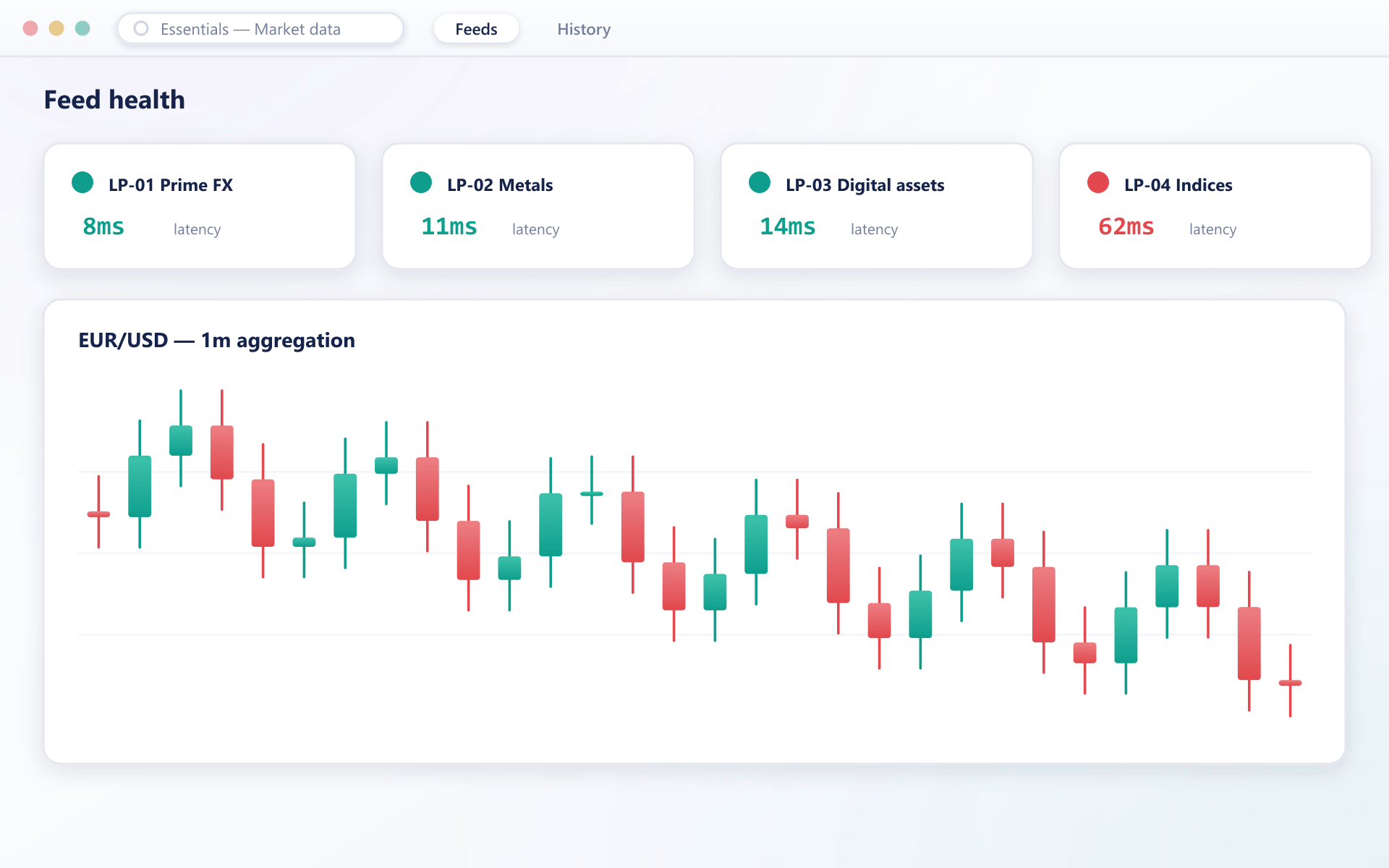
The candle the chart draws is the trade that happened
Moving-average overlays and volume bars are aggregated from the same trade prints the matching engine produced, not a separate charting feed.
FAQ
Market data: common questions
5 short answers to what teams ask before a demo.
No, and that is deliberate. Candles are aggregated from the same trade data the matching engine produced, which is why the chart and the order book can never show contradictory prices.
Over a streaming connection. Quotes, depth updates and trade prints are pushed as they occur rather than being requested on an interval, both in the platform and over the public API.
For the life of the instrument. Trades and aggregated candles remain queryable, which is what supports backtesting, client statements and investigation of historical activity.
Yes. Markup, a spread floor and stale-quote filtering are applied per instrument and per client group before the price becomes visible or tradeable.
Yes, subject to the same entitlements as the terminal. A client receives data for the instruments their group is permitted to trade, and nothing else.
Still have a question?
A specialist will answer it directly, with your set-up in mind.
Ask a specialistCompare the chart and the book side by side
We will run trades during the walkthrough so you can watch the print, the candle and the ledger entry appear together.