Platform Essentials
Listing a market should take an afternoon, not a release cycle
An instrument is a configuration object. Its specification, calendar, pricing source, markup, risk limits and audience are all fields your operations team fills in, and it goes live when they publish it.
Lifecycle
Draft
Configure and validate
Invisible to every client
Live
Visible and tradeable for chosen groups
Hidden from groups without it
Suspended
Reduce or close existing positions
New orders refused
Retired
History, statements and reports intact
Gone from every trading surface
What an instrument carries
One object holds all of it
Which is why nothing gets configured in two places.
No release requiredContract specification
Contract size, tick value, quote precision, quantity step, minimum and maximum order size and the settlement currency.
Trading calendar
Session hours, weekly breaks, market holidays and any partial sessions, applied automatically to order acceptance.
Pricing configuration
Which upstream sources feed the instrument, how they aggregate, and the markup and spread floor applied before quoting.
Risk parameters
Price bands, size caps, leverage bands, margin requirements and exposure limits, attached as a baseline.
See it live
Every asset class, one instrument picker
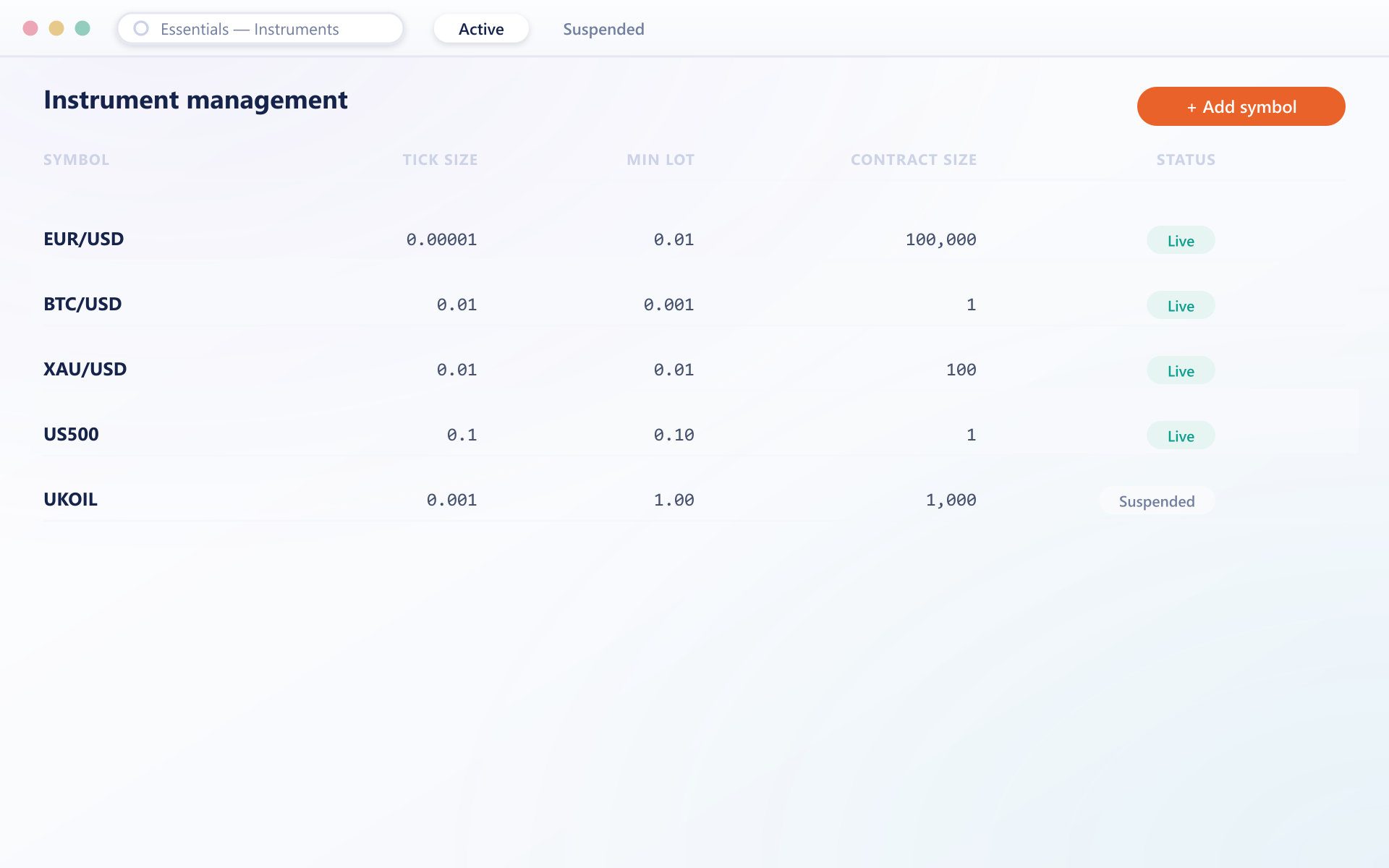
Once an instrument is published, it appears in the picker for every group it is visible to, grouped by asset class the way clients expect to browse.
Why listing speed is commercial
Markets move faster than release cycles, and clients notice which desks keep up.
Respond to demand
Listing the same week rather than next quarter.
Safe rollouts
Publish to one group first, then the whole book.
Controlled incidents
Suspension is a proportionate response, not all-or-nothing.
History stays whole
Retiring rather than deleting keeps past reports correct.
FAQ
Instrument management: common questions
5 short answers to what teams ask before a demo.
No. An instrument is a configuration object created and published in the console. Your operations team can prepare it as a draft and publish it when the commercial decision is made.
Yes. Publishing is per client group. Groups that do not have the instrument published to them will not find it in search, in the market list or in a watchlist.
Suspension refuses new orders while allowing existing positions to be reduced or closed, which suits a temporary market disruption. Retirement removes the instrument from trading surfaces permanently while keeping all historical records intact.
Most can, and the change applies from the next order. Changes that would affect the valuation of open positions are deliberately restricted, and where permitted they require an approval step.
By mapping it to one or more upstream liquidity sources. Where several are attached the platform aggregates them, and your markup and spread floor are applied before the client sees a quote.
Still have a question?
A specialist will answer it directly, with your set-up in mind.
Ask a specialistList an instrument on the call
Pick a market and we will configure and publish it from scratch during the walkthrough.