Supported Markets
Indices, metals, energy and equities under one contract model
Every contract for difference in TradeX shares the same instrument structure. What differs between an index and a barrel of oil is specification and calendar, not a separate system.
Indices
Cash and futures-based index exposure
Metals
Precious and industrial, as margin instruments
Energy
Oil, gas and power contracts
Commodities
Agricultural and soft contracts
Equities
Single-name shares, cash or contract
ETFs
Exchange traded funds alongside single names
NDFs
Cash-settled forwards on restricted currencies
See it live
Rules and limits, by instrument group
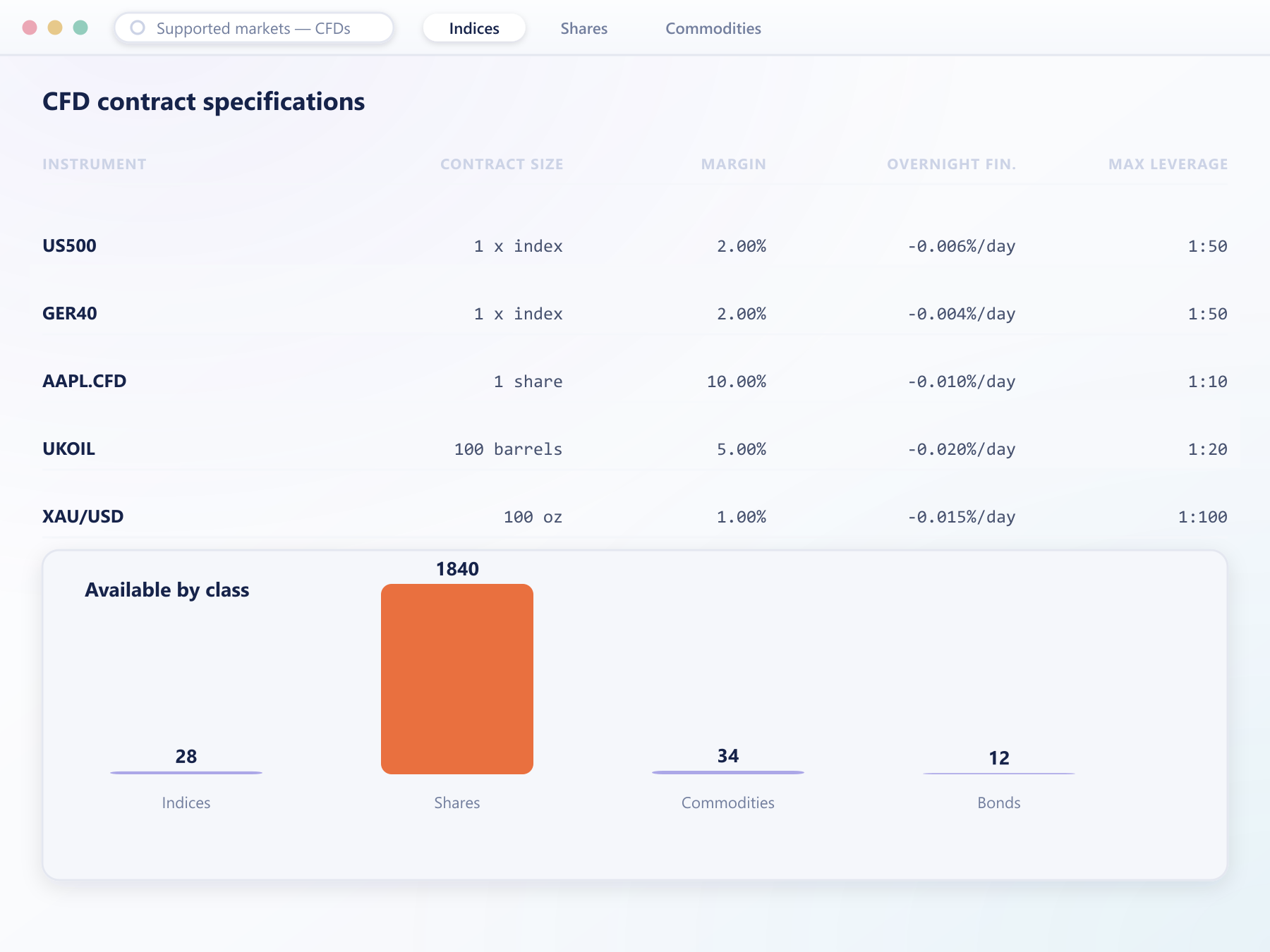
Margin and rollover rules across indices, metals and equities render as the same tiered rule table your operations team edits per family.
The instrument lifecycle
The events that make CFD operations tedious, and where each is dealt with
Every session
Market calendar
Each instrument follows the trading calendar of its underlying market, including partial sessions and holidays. Orders are not accepted outside those hours.
Each night
Financing
Overnight financing on open positions is configured per instrument for long and short, using the same rollover machinery as every other asset class.
On the date
Dividend adjustment
Equity and index contracts can carry adjustments applied to open positions on the effective date, with a ledger entry on each side.
At expiry
Rollover
Where a contract expires, positions roll according to the configured schedule with the price adjustment recorded as its own entry.
Why breadth matters
Clients diversify. A platform that cannot follow them loses the account rather than the trade.
One instrument model across every asset classOne account, many markets
A client trading currencies, an index and gold does it from one balance and one margin figure.
Less operational overhead
The same instrument model means one process for listing, pricing and reporting.
Fewer corporate-action errors
Automated dividend and rollover handling removes a category of painful mistakes.
Room to respond
When clients ask for a market, adding it is configuration rather than a project.
FAQ
CFD markets: common questions
5 short answers to what teams ask before a demo.
Indices, precious and industrial metals, energy contracts, agricultural and soft commodities, single-name equities, exchange traded funds and non-deliverable forwards. Each is an instrument with its own specification.
A dividend adjustment is scheduled against the instrument and applied to open positions on the effective date, with its own ledger entry on each affected account so the client can see the cause.
Positions roll according to the schedule configured on the instrument, with the price adjustment recorded as a separate entry. Where you prefer positions to close rather than roll, that is also configurable.
Yes. Each instrument carries its own calendar including session hours, partial sessions and market holidays. Orders are not accepted outside those hours, and resting orders are held.
Yes. The same rollover machinery applies across asset classes, with rates configured per instrument for the long and short side independently.
Still have a question?
A specialist will answer it directly, with your set-up in mind.
Ask a specialistSee a corporate action applied
We will schedule a dividend adjustment on a demo instrument and show you exactly what lands on the client account.